Mahatma Gandhi Quotes
The only safe and honorable course for a self-respecting man is to do what I have decided to do, that is, to submit without protest to the penalty of disobedience ... not for want of respect for lawful authority, but in obedience to the higher law of our being, the voice of conscience.
Gandhi, Mahatma. The Collected Works of Mahatma Gandhi. Vol. 13, Publications Division, Ministry of Information and Broadcasting, Government of India, 1964, p. 375.


those engaging in civil disobedience This was written in Scotland before Witherspoon emigrated to America. A major issue of political and religious debate at the time in Scotland was civil disobedience. “Reform” religious advocates argued for the moral propriety of civil disobedience where the protester’s conscience felt that the laws were immoral and unjust. The were referred to as “Moderates.” Witherspoon, early in his career, was one of the conservatives who argued then, against the Moderates, that civil disobedience should be punished very severely. The conservative rhetoric at the time sarcastically referred to protestors as having “tender consciences.” The issue was contentious then, later in America, and is so even today.


This Sunnah of the Prophet is seen by many Shi’a Muslims as a call to renounce unjust governments and leaders. This is different from the view held by most Sunni Muslims that rulers are to be obeyed even if they are not always just. See {590245}.


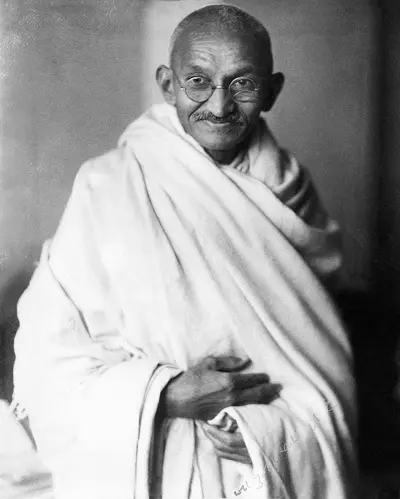
Mohandas Karamchand Gandhi was an Indian lawyer, anti-colonial nationalist, and political ethicist, who employed nonviolent resistance to lead the successful campaign for India's independence from British rule, and in turn inspired movements for civil rights and freedom across the world. The honorific Mahātmā (Sanskrit: "great-souled", "venerable"), first applied to him in 1914 in South Africa, is now used throughout the world.
