John le Carre Quotes
The one thing you can bet is that spying is never over. Spying is like the wiring in this building: It's just a question of who takes it over and switches on the lights. It will go on and on and on.
Bruccoli, Matthew J., and Judith S. Baughman, editors. Conversations with John le Carré. University Press of Mississippi, 2004.


While it is true that almost all nations have intelligence agencies and collect intelligence about both friends and foes, our allies did not bug the personal phones of leaders of friendly countries and were very distressed when they discovered that the US NSA had access to the personal calls of world leaders including the leaders of Brazil, Germany and France. Rubio and others believed that they only reason our allies had not done so is that they did not have the technical capability to do so; otherwise they would have been bugging our Presidential and cabinet level phones. President Obama ordered the practice stopped with respect to our allies.


Harmon was one of the nation’s experts on Intelligence. She pointed out that the CIA spent a relatively small portion of its budget on spies, intelligence and analysis relative to the larger proportion that went to their paramilitary covert operations. Since its inception, the CIA professionals have always preferred the glamour, adventure, and machismo of covert operations as opposed to the relative drudgery of intelligence gathering and analysis. This many believe explains the many major intelligence blunders the CIA has made such as missing the fall of the Berlin Wall, the disintegration of the Soviet Union, the development of nuclear bombs in several countries and the totally mistaken analysis in the Bay of Pigs and The trigger for the Iraq War.


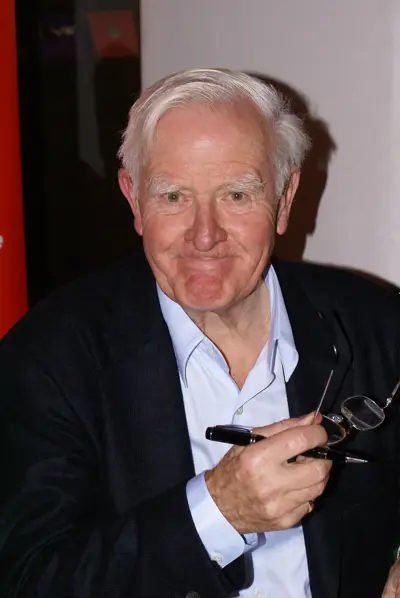
David John Moore Cornwell, better known by his pen name John le Carré (/ləˈkæreɪ/), was an English author with Irish citizenship, best known for his espionage novels. During the 1950s and 1960s, he worked for both the Security Service (MI5) and the Secret Intelligence Service (MI6). His third novel, The Spy Who Came In from the Cold (1963), became an international best-seller and remains one of his best-known works.
