Paul Krugman Quotes
The next time you hear some talking head opining on what we must do to satisfy the markets, ask yourself “How does he know?” For the truth is that when people talk about what markets demand, what they’re really doing is trying to bully us into doing what they themselves want.
Paul Krugman, Economist & Political Columnist, Nobel Laureate in Economics, “What Markets Will”, New York Times, October 19, 2014
Sourced by: Eigen's Political and Historical Quotations


He was not able to maintain this position. Even Communist and Socialist states have had to cope with problems triggered by markets.


The Texas Exchange, one of the first farmer's cooperatives, in 1888 raised over $200,000 in collateral on which they wished to borrow about $100,000. No one in Texas would lend to a 'radical' cooperative, even with collateral. In 1890 the Texas Exchange collapsed.


FDR even admitted that very wealthy men and corporations controlled most U. S. governments including the administration of his own political party. Roosevelt did a great deal to improve the situation but by the latter years of the 20th century, private financial entities gained back much of the influence and control. The result was the Meltdown of 2008 and the Great Recession, where another set of regulations and laws (Dodd-Frank) was made law by the Obama Administration. However, the financial corporations still had enormous political influence as a result of unlimited campaign contributions to politicians and unlimited lobbying.


The early credit markets were basically quite simple and stayed that way until the latter part of the 20th century when they became more complex and sophisticated. In the beginning of the 21st century, they had become so sophisticated and complex that often the people and companies selling them could not understand them or their implications. The government regulators also were in the same boat.


This statement during the First World War so frightened the Woodrow Wilson administration that they jailed Debs for saying it and other similar statements like {640244}. The statement was generally suppressed with few newspapers carrying it. The problem for the administration was that enlistments might decrease and force them to draft the wealthy and their sons which was, with very few exceptions, not acceptable to the “upper classes”.
Actuaries and economists are split over the issue of how to measure the future value of a pension fund. They agree on how to measure the expected costs, but in order to determine whether or not the pension is adequately funded, they must also determine its likely value in the future as it is theoretically invested and earning money each year. One school of thought says that there is no difference between valuing a pension and any other future asset. You take the current interest rate that it is earning and project that into the future. The other school argues that this classic method gives very different estimates from year to year or even month to moth as the interest rate fluctuates with the stock and bond market. A pension that is earning 6 percent may be very well funded, but at 2 percent the funding of the same plan might be inadequate. So they argue that try year the pension could go from adequate funding to not just cease of the temporary markets. They argue that the rate that should be used is an average historical rate. However, their opponents point out that the interest rates earned in the future may never reach the rates of the past and they would have to exceed those to make up for the lower interest rates currently. So this method tend to underestimate the needs of the pension fund and future taxpayers and employees are going to be stuck with the bill for the difference. The classic method however, tends to underestimate and requires pensions to put in more funds currently. The other side argues that this overcharges current taxpayers and makes current workers pay for the pensions of future workers. At the time this debate was furious. Politicians and pension fund managers much preferred the method that overestimates as they then do not have to increase taxes or raise the pension contributions of the present workers—a much easier political position to take. The debate rages on.


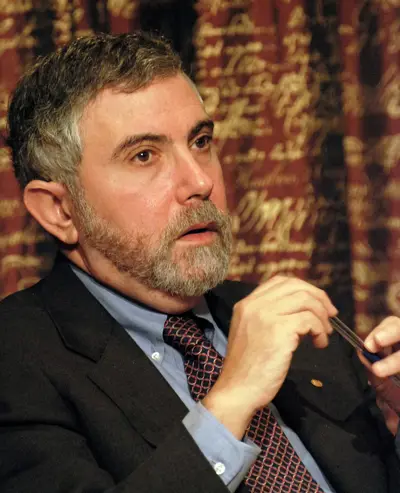
Paul Robin Krugman is an American economist who is the Distinguished Professor of Economics at the Graduate Center of the City University of New York, and a columnist for The New York Times. In 2008, Krugman was awarded the Nobel Memorial Prize in Economic Sciences for his contributions to New Trade Theory and New Economic Geography. The Prize Committee cited Krugman's work explaining the patterns of international trade and the geographic distribution of economic activity, by examining the effects of economies of scale and of consumer preferences for diverse goods and services.
