Lucretius Quotes
The nature of the universe has by no means been made through divine power, seeing how great are the faults that mar it.
Lucretius. On the Nature of Things. Translated by W. H. D. Rouse, Harvard University Press, 1924, p. 101.


The religious theology of the Church of England had accepted the fact based on Newton’s work, that the heavenly bodies followed a set of scientific laws that were themselves created by God. However, the Church could not accept the same principle when it came to the different species of humans and lower order animals. Each species they believe was created with all its characteristics by God directly and species could not change, develop, regress, go extinct unless God specifically ordained that. It was this inconsistency that Darwin was afraid would produce religious attacks on him and his notions of natural selection while astronomy and physics was treated very different theologically. Darwin delayed publishing his findings for 25 years hoping to find a religious atmosphere that would treat biology much as physics and astronomy. It didn’t come and finally he published and took the heat, which actually was not very great. With the exception of some religious fundamentalists, most other elements of society welcomed and supported Darwin’s ideas which today we realize were among the most important ever put forth in the world of science.


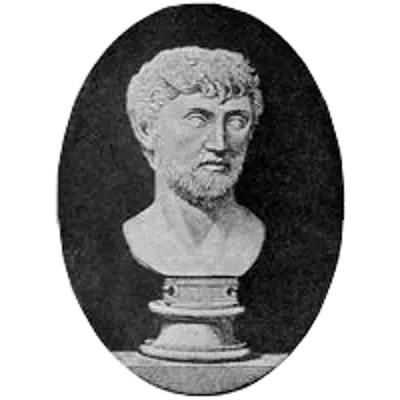
Titus Lucretius Carus (/ˈtaɪtəs luːˈkriːʃəs/ TY-təs loo-KREE-shəs, Latin: [ˈtɪtʊs lʊˈkreːtɪ.ʊs ˈkaːrʊs]; c. 99 – c. 55 BC) was a Roman poet and philosopher. His only known work is the philosophical poem De rerum natura, a didactic work about the tenets and philosophy of Epicureanism, and which usually is translated into English as On the Nature of Things. Lucretius has been credited with originating the concept of the three-age system that was formalised in 1836 by C. J. Thomsen.
