Ruhollah Khomeini Quotes
The natural world is the lowest element, the scum of creation. What is decisive is the beyond: the divine world, that is eternal.
This is the essence of his political / theological view of martyrdom that he preached and still exists today in many Islamic subcultures.
Ruhollah Khomeini, 1900-1989, Iranian Cleric (Ayatollah) & Revolutionary Leader, October 1980
Sourced by: Eigen's Political and Historical Quotations


This for many suicide bombers provides much of the motivation and overcomes the prospect of suicide. According to Islamic doctrine, those killed in “the cause of Allah” go immediately to Paradise, unlike those who die a natural death. And when in Paradise, the males get 72 beautiful virgins.

These “benefits” as well as males getting 72 virgins are constantly told to young and impressionable Muslims, some of whom take it so literally that they become suicide bombers. They actually believe that blowing themselves up feels only like the sting of a mosquito. This sales pitch for suicide bombers and other martyrs is also effective because with the poor education, high unemployment, and few political and civil rights, most young Arab males have no other way of obtaining “honor, dignity, and respect.”
Martyrs to most Muslims are people who die when defending Islam, which includes under the definitions of the Muslim Fundamentalists murdering innocent civilians including women and children. In addition to ascending directly to heaven, the male martyr gets 72 virgins in Paradise.


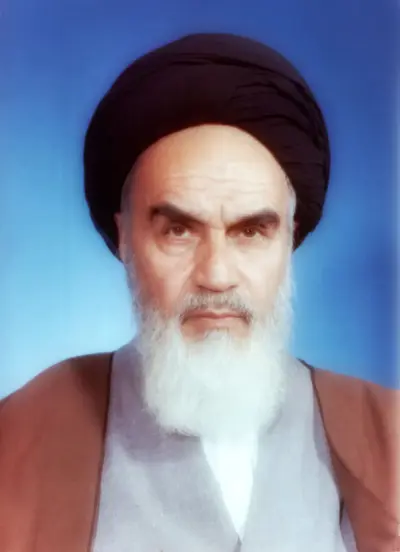
Sayyid Ruhollah Musavi Khomeini, also known in the Western world as Ayatollah Khomeini, was an Iranian political and religious leader. He was the founder of the Islamic Republic of Iran and the leader of the 1979 Iranian Revolution, which saw the overthrow of the last Shah of Iran, Mohammad Reza Pahlavi, and the end of the 2,500-year-old Persian monarchy. Following the revolution, Khomeini became the country's Supreme Leader, a position created in the constitution of the Islamic Republic as the highest-ranking political and religious authority of the nation, which he held until his death. Most of his reign was taken up by the Iran–Iraq War of 1980–1988. He was succeeded by Ali Khamenei on 4 June 1989.
