Richard Helms Quotes
The nation must to a degree take it on faith that we [the CIA] too are honorable men devoted to her service.
Richard Helms, 1913-2002, Director, U. S. Central Intelligence Agency, U. S. Ambassador to Iran, Speech, August 14, 1971
Sourced by: Eigen's Political and Historical Quotations


Recipient of the National Security Medal


even though in this case the objective The State Department, the Defense Department and most important President Kennedy had decided to get rid of Diem. Most of the Central Intelligence Agency thought that this was a very unwise policy, because Diem was a known risk, and the people who would replace him and their talents and policies were unknown. The negatives of Diem—the facts that he, a Christian, was persecuting the majority Buddhists, was totally corrupt, and not a very good leader was less distressful to the CIA than to the President and the other agencies as the intelligence agency frequently not only tolerated “offensive” allies, but actually employed them including war criminals. Another importance of this quotation is that it shows that it was by no means certain that the CIA would always follow the orders of the President and the government policy makers. Colby, who was not the agency director at that time but was the head of the South East Bureau, was one high level official who argued that the policies should always be followed even if they were unwise or foolish. Another importance of this quotation is that it illustrate a common error that administrations are frequently forced to make: making a policy decision to eliminate a problem while not having much of an idea of what the alternative or consequence would be when the policy is implemented. The Syrian Civil War in 2013 was a good example. The Government side appeared to have used Chemical Warfare on Civilians and public opinion demanded that we do something. However, having a no-fly zone or any of the alternatives to prevent (punish) the government for the Chemical Warfare would strengthen the rebel side which was made up of numerous factions—some of which were known Islamic fundamentalist terrorists and jihadists. If the balance of power were tipped toward the rebels, the consequence for the American national interests were unknown—just as the consequence of ousting Diem was unknown and turned out to also be bad and was probably worse.

Agree resigned from the CIA in protest to its political position.

If Casey had listened to Sofaer as the State Department did, President Reagan would have been spared the worst Scandal of his Presidency—Iran Contra. Casey had a great antipathy to lawyers. See {637470}.


Harmon was one of the nation’s experts on Intelligence. She pointed out that the CIA spent a relatively small portion of its budget on spies, intelligence and analysis relative to the larger proportion that went to their paramilitary covert operations. Since its inception, the CIA professionals have always preferred the glamour, adventure, and machismo of covert operations as opposed to the relative drudgery of intelligence gathering and analysis. This many believe explains the many major intelligence blunders the CIA has made such as missing the fall of the Berlin Wall, the disintegration of the Soviet Union, the development of nuclear bombs in several countries and the totally mistaken analysis in the Bay of Pigs and The trigger for the Iraq War.

Bush had served earlier as the head of the CIA and understood the costs of such better than most. He was put in a difficult position when his son was President and one of the senior White House operatives, for small partisan advantage, leaked the name and identity of Valerie Plame, a covert CIA operative. Bush the father, remained silent even after the leaker was identified.


Intelligence agents tend to prefer covert activities to the less dramatic, non-exciting, activity of gathering and analyzing intelligence. Most national intelligence services tend to enlarge their portfolio to include covert activities regardless of what the national leaders intended. Because of the secrecy, they can often get away with this.

The United States is the only nation that overtly defines covert activity in its legal system. It makes these very subtle distinctions which seemed to many intelligence leaders like Lowenthal a distinction without much of a difference and an attempt by our democracy to make moral and legal distinctions so the dirty parts of the business of espionage seems consistent with an open democracy.

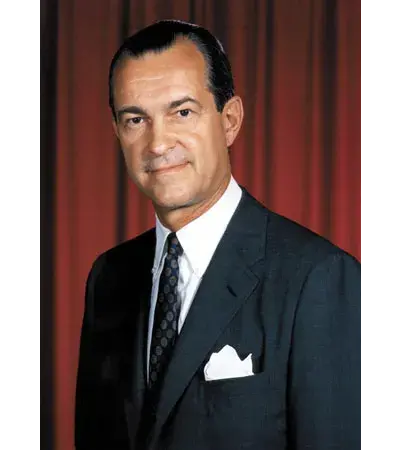
Richard McGarrah Helms was an American government official and diplomat who served as Director of Central Intelligence (DCI) from 1966 to 1973. Helms began intelligence work with the Office of Strategic Services during World War II. Following the 1947 creation of the Central Intelligence Agency (CIA) he rose in its ranks during the presidencies of Truman, Eisenhower and Kennedy. Helms then was DCI under Presidents Johnson and Nixon.
