Mahatma Gandhi Quotes
The most heinous and the most cruel crimes of which history has record have been committed under the cover of religion or equally noble motive.
Mohandas K. Gandhi, 1869-1948, Indian Political and Spiritual Leader, Young India, July 7, 1927
Sourced by: Eigen's Political and Historical Quotations


Pandita Indrani Rampersad. She is the first Hindu woman who ever became a pundit—a religious expert who guides Hindus. She is also a professor in the United States.


Most Muslims believe that Islam is a religion of peace. A small minority of fanatic extremists believe as Al-Buti does. They are the ones who are the most dangerous for all.


He commonly incites Muslims to violence against other religions which he believes totally false. Therefore, in his interpretation of Islam, it is the obligation of Muslims to kill the heretics and blasphemers. See {620307}. He was one of the leading inciters of the Bali bombing which killed so many tourists. Notice the classic attempt to first dehumanize the people who are to be the targets of violence and atrocities to overcome the normal inhibitions of most humans to do violence to another.


Both Puritans and Quakers were persecuted and physically abused in England by the Anglican Church. The Puritans as soon as they became dominant in part of the American colonies began persecuting Quakers. The Quakers who were the majority in the Pennsylvania colony, however were tolerant of other religions. This history was another of the many reasons the Founding Fathers wanted no established church. A “scorpion” was a type of whip that was particularly painful.


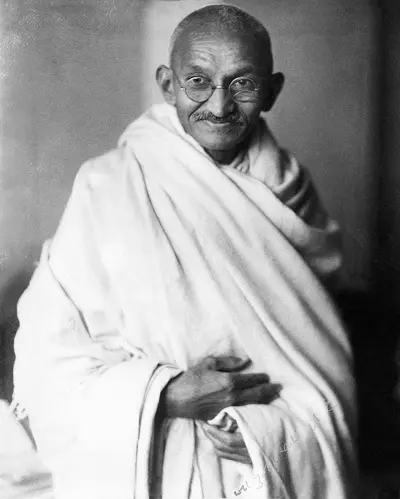
Mohandas Karamchand Gandhi was an Indian lawyer, anti-colonial nationalist, and political ethicist, who employed nonviolent resistance to lead the successful campaign for India's independence from British rule, and in turn inspired movements for civil rights and freedom across the world. The honorific Mahātmā (Sanskrit: "great-souled", "venerable"), first applied to him in 1914 in South Africa, is now used throughout the world.
