Bertrand Russell Quotes
The Mormons had a divine revelation in favour of polygamy, but under pressure from the United States Government they discovered that the revelation was not binding.
Russell, Bertrand. Unpopular Essays. Simon and Schuster, 1950, p. 104.


Federal officials and commissioners issued laws, directives and orders that were very unpopular with the Mormons who were in the overwhelming majority of the Utah territory. The Mormon “government” was a type of theocracy but a very popular one. The Mormons tried to test the constitutionality and legality of the Federal laws and orders before they would obey. The government position was that they should obey and then could test the laws in the courts. The Mormons eventually lost in the courts anyway, but the principle of obedience to law until it can be tested and reversed has generally been the rule of U. S. Law. However, civil disobedience in which many religions have engaged in our history argues the obverse. Eventually Taylor had to go “underground” and rule the church from exile in which state he died.
“Celestial Marriage” is the term then used be Mormons to describe plural marriage.
Congress had passed the Edmunds Act prohibiting plural marriage. Taylor, who himself had 7 wives and 35 children, went “underground” and secretly operated the church from exile.

Describes the contest between President Ulysses S. Grant and the Mormons over the issue of polygamy in the 1860s


This editorial was an excellent summary of the issue of Mormon polygamy where both sides are described. The Thugs were a violent religious sect in India where females were forced into marriage.

This was a momentous change of doctrine for the Mormon Church. Prior to this revelation, Mormons would very actively convert and accept Blacks as members but would not ordain a Black, This doctrine had made Mormons, who were themselves persecuted in America, more acceptable—especially in the Southern States. However, it had been a source of great political and intellectual embarrassment to the Church until Kimball resolved the problem with this declaration.


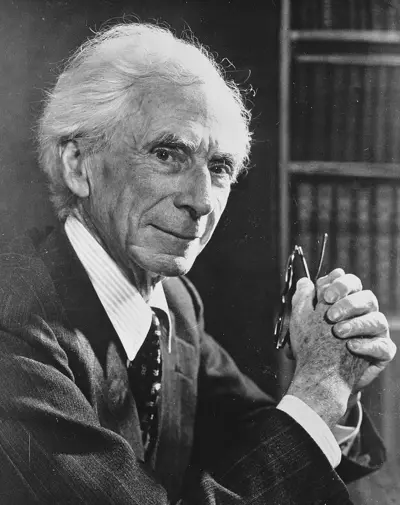
Bertrand Arthur William Russell, 3rd Earl Russell OM FRS was a British polymath, philosopher, logician, mathematician, historian, writer, social critic, political activist, and Nobel laureate. Bertrand Russell was one of the most influential and widely known intellectual figures of the twentieth century. In 1950 he was awarded the Nobel Prize in Literature for his extensive contributions to world literature and for his “rationality and humanity, as a fearless champion of free speech and free thought in the West.“
