Frank B. Kellogg Quotes
The Monroe doctrine is simply a doctrine of self-defense. It does not consist of any agreement between the United States and any country in the Western Hemisphere or anywhere else.
Frank B. Kellogg, 1856–1937, U. S. Secretary of State, U. S. Senator (Republican, MN), Testimony, Senate Foreign Relations Committee, December 1928
Sourced by: Eigen's Political and Historical Quotations


This is a very important quotation in that there are some who believed—then and now—narrowly that self defense is limited to responding to only physical attacks on the United States per se. Kellogg made it clear that it includes attacks on the United States and any of its possessions. Most important it allows response to any “danger” to the United States. By this definition, for example, if Saddam had been developing weapons of mass destruction in the Iraq war, the pre-emptive attack would have been self-defense. Since the claim of weapons development was bogus, it was not self defense. The key variable a reasonable danger. Nations determine that by what others do and say. In 2011, if Iran were developing nuclear weapons the U. S. could attack as an act of self defense because the Iranian highest level officials have called for “death to the United States”. When they just had the intention to harm us, there was no danger. But when they add the means to harm us to the intention, that is a danger. Likewise other nations may act in self defense if a potential enemy threatens to endanger them and has the means to carry out the threats or desires.

One major problem at the time was that the Soviet Union was supporting and instigating revolutions in many parts of the world. When most nations of the UN wanted to provide peace keeping troops to quell the conflict, the Russians would veto and block the effort, Vandenberg wanted the UN to change the rules regarding the veto. The original right of veto for the major nations was originally included at the insistence of the United States and many Americans did not want to give it up or have any exceptions lest there be more. The Russians at that time also did not want to give up any of their veto powers. Another method that Vandenberg wanted to solve the Russian peacekeeping blockage problem was for America to engage in more collective security pacts so that action could be taken without UN Security Council unanimity by going around the UN.


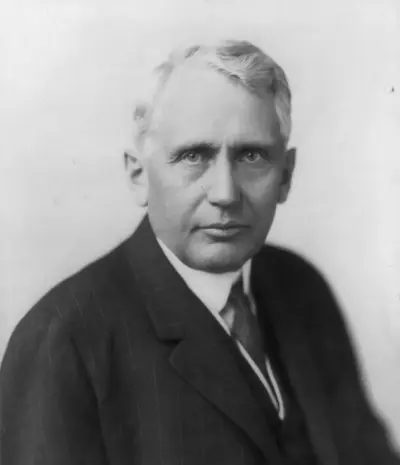
Frank Billings Kellogg was an American lawyer, politician, and statesman who served in the U.S. Senate and as U.S. Secretary of State. He co-authored the Kellogg–Briand Pact, for which he was awarded the Nobel Peace Prize in 1929.
