Frederick the Great Quotes
The mob does not deserve to be enlightened.
Frederick II, 1712-1786, [The Great], King of Prussia, Letter to Voltaire, August 7, 1766
Sourced by: Eigen's Political and Historical Quotations


Even sophisticated societies have anti-intellectual movements. This happened in revolutionary France, but also at times even in the United States. In 2012, for example, Rick Santorum a candidate for the Republican presidential nomination called President Obama a “snob” for wanting to enable all students to go to college. Santorum was appealing to an anti-intellectual movement in the country that distrusted intellectuals as “elites.”


The terror to which he referred was to the French Revolution’s executing former aristocrats and then including anyone suspected of monarchist sympathies. This quotation shows how fanatics can rationalize evil as justice.


There are a number of reasons for punishing someone for violating a law. Confucius argues that when the person will no longer continue to commit the crime, further punishment is uncalled for. However, others would argue that there are other reasons to keep punishing a person including retribution / vengeance, incapacitation (people can’t commit crimes if they are in jail), and prevention (make an example to discourage others).


The defendants included the County Sheriff, a deputy, and the Imperial Wizard of the Mississippi KKK who had ordered the murders. Cox, an inveterate racist (See {637614}.), gave the two men convicted of 1st degree murder, including the Klan leader, to only 10 years, and the 2nd degree murderers were only sentenced to 3-5 years as the trial was Federal for Civil Rights violations but the judge did not even impose the maximum jail sentence.
Historically, for many Americans the educated were considered as elite in a very positive sense. Other people at other times saw educated elites as dangerous to religion and conservatism. Here the educate are described as an “aristocracy” and the only aristocracy that was acceptable and desirable


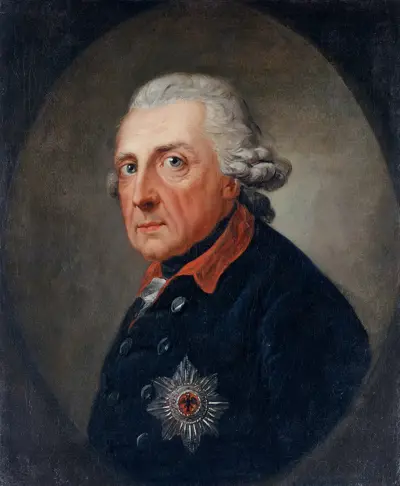
Frederick II was a Prussian king and military leader who ruled the Kingdom of Prussia from 1740 until 1786, reigning longer than any other Hohenzollern king. His most significant accomplishments during his reign included his reorganization of Prussian armies, his military successes in the Silesian wars and the Partitions of Poland, and his patronage of the arts and the Enlightenment. Frederick was the last Hohenzollern monarch titled King in Prussia and declared himself King of Prussia after annexing strategic parts of the Polish–Lithuanian Commonwealth in 1772. Prussia greatly increased its territories and became a leading military power in Europe under his rule. He became known as Frederick the Great (German: Friedrich der Große) and was nicknamed "The Old Fritz" (German: "Der Alte Fritz") by the Prussian people and eventually the rest of Germany.
