Mahmoud Darwish Quotes
The metaphor for Palestine is stronger than the Palestine of reality.
Shatz, Adam. "A Love Story Between an Arab Poet and His Land." The New York Times, 22 Dec. 2001, p. B7.


It was speeches like this which created a distrust of the Palestinian intentions when there were negotiations of land for peace. Worry that peace was just a pretext for war or takeover, inhibited many Israelis from wanting to give up anything unless they could get a more reliable partner. The Palestinians had a traditional fertility rate that was several times that of the Israelis.

This statement hardened the Israeli population away from anything that would bring Hamas more power. The PLO leader had, for ALL the Palestinian people, recognized the right of Israel to exist {633062}. Now Hamas was not only reneging on the Arafat declaration, but also would not even use the term “Israel” and instead calls the nation which in less time than the Palestinians have had, has developed a modern, industrial, democratic state far in advance of the Palestinians or any of the Arab nations for that matter. Yet it is relegated to a “project” with the great hope of having it come to an end—the destruction of Israel. The Israelis observe that this is a de facto declaration of war, and hence treat Gaza and Hamas as an enemy force to be reckoned with. See {635338} for another alarming reneging of the recognition of Israel.

This is an example of a diplomatic leader losing control of herself and addressing a foreign dignitary in most undiplomatic language. The basic accusation was however quite justified. The Palestinians were preoccupied with many symbols of dignity and respect while ignoring economic development, technology, health and standard of living that could have been obtained by a compromise with Israel to create a Palestinian state.


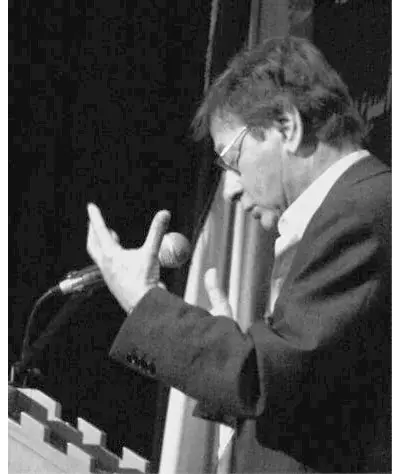
Mahmoud Darwish was a Palestinian poet and author who was regarded as the Palestinian national poet. He won numerous awards for his works. Darwish used Palestine as a metaphor for the loss of Eden, birth and resurrection, and the anguish of dispossession and exile. He has been described as incarnating and reflecting "the tradition of the political poet in Islam, the man of action whose action is poetry." He also served as an editor for several literary magazines in Palestine.
