Theodore Roosevelt Quotes
The men with the muckrakes are often indispensable but only if they know when to stop raking muck.
Lincoln Steffens and Ida Tarbell had written exposes of business misconduct and lax government enforcement of laws. Politicians and business leaders were outraged and wanted something done to prevent this embarrassment and the riling up of the voting public. The President, a reformer himself, and a personal friend of Lincoln Steffens, took what seemed like a middle ground, where the government would not interfere with the 1st Amendment rights of the Journalists provided they did not go too far. But of course everyone had a different idea of “when to stop” so there never was a practical limit.
Theodore Roosevelt, 1858-1919, 26th President of the United States (Republican, NY), Speech at the dedication of the new House Office Building, April 14, 1906
Sourced by: Eigen's Political and Historical Quotations


Teapot Dome was one of the biggest scandals in American History where members of the President’s Cabinet and other politicians were stealing massive amounts of public money. Yet only on Newspaper would write about it until the complete story was known.


Husayn Ali Nuri


Until the 20th century almost all American political media were shamelessly and overtly biased—left or right. Political Parties had their own de facto publications much like Fox News became for the Republicans in the 21st century. In the 20th century journalism developed into a profession that evolved standards of objectivity in reporting. That norm then prevailed for about 70 years. With the extreme polarization of the later years of the 29th Century the right wing began to accuse much of the media of a left wing bias, and the media tended to react as Krugman describes in this quotation. The model of having spokespersons for “each side” of an issue works for highly subjective political preferences with a two party system, but where it broke down is with scientific and technical issues. On these, there often really are not two scientific points of view, but there is a scientific consensus of the vast majority of scientists and almost all the prestigious and accomplished scientists are in accord. However, there may be some who have a cultural, religious and/or political concern for some science and its implications for society. They in turn find a scientist or two, often one who is unaccomplished and not recognized in the scientific field to argue a different point of view. The media have tended to equate the two and have a “debate” as if there were two sides to the science when there are not. These issues tend to cluster around scientific medical issues involving sex and birth control methods, environment and conservation, evolution, the age of the earth and the method of creation of the universe. The problem is particularly exacerbated by the general scientific illiteracy of the American population and the relatively few journalists who themselves are scientifically literate who can explain scientific issues well.
His firm was not very vulnerable to that risk. However, reporters have been so frequently been lied to by corporations and politicians that many have reached the point where they hear a rumor that something is true, and then they assume it is and devote their energies to proving it. Gorman was intellectually right, but practically so many other corporate executives and politicians have prevaricated that there is not enough trust for a rational process.


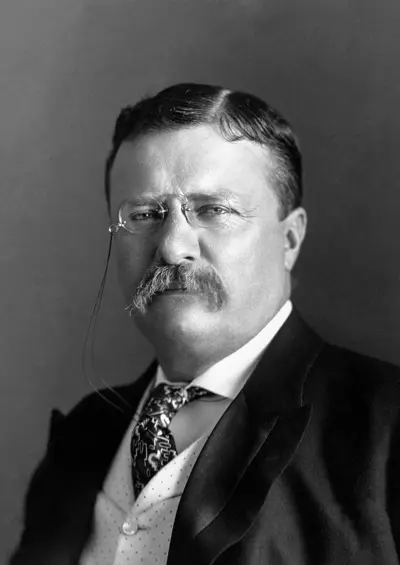
Theodore Roosevelt Jr., often referred to as Teddy or his initials T. R., was an American statesman, conservationist, naturalist, historian, and writer, who served as the 26th president of the United States from 1901 to 1909. He previously served as 33rd governor of New York from 1899 to 1900 and the 25th vice president of the United States from March to September 1901. Roosevelt emerged as a leader of the Republican Party and became a driving force for anti-trust and Progressive policies.
