Elizabeth Cady Stanton Quotes
The memory of my own suffering has prevented me from ever shadowing one young soul with the superstition of the Christian religion.
Stanton, Elizabeth Cady. Eighty Years and More: Reminiscences 1815-1897. European Publishing Company, 1898, p. 44.


Constantine the Great. Roman Emperors saw Christians as their most dangerous foes. However, Constantine, with this edict, enabled Christianity to thrive and grow legally in the Western world. Later Constantine himself converted to Christianity. This edict ceased the vicious Roman persecution that Christians had endured.


The Ethical Culture Society was founded as what many people call a secular religion. See {619942}.

Husayn Ali Nuri. This quotation illustrates one of the reasons that the Muslim Iranian fundamentalists are so fearful of Bahai, a reform offshoot of Islam. For the orthodox Muslim there must be no separation of church and state—they are one and the same. The Bahai minority of Iran have been hunted down and in many cases killed on the grounds that they were heretics and blasphemers.


This remarkable advice to his followers was all the more remarkable in that the Methodists were gaining adherents by appealing to the rectitude of people and opposing the corruption of much religion that had become commonplace. With this kind of original leadership Methodists have been among the most tolerant of Christian groups.
The modernity of this ancient leader is striking. For another example see his view on the importance of engendering supportive public opinion: XXX

Robertson does not mention the fact that Hindus are the majority of the world’s largest democracy—India. Freedom thrives there and political equality is extensive. However, economic equality is sadly lacking as in the Untied States. However, India is more unequal.


Catholics were blamed by some for the defeat of Henry Clay in 1844. Anti catholic sentiment was high:. Johnson was then a Congressman representing a district where there were few Catholics and strong anti-Catholic feeling.
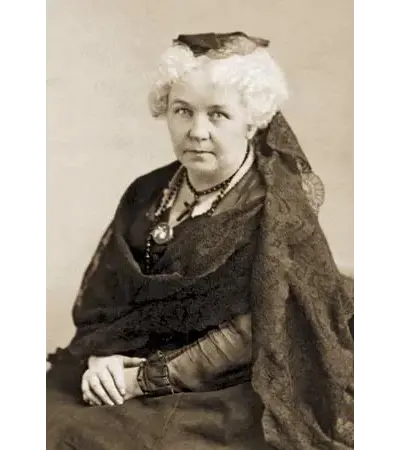
Elizabeth Cady Stanton was a leader of the women's rights movement in the U.S. during the mid- to late-1800s. She was the main force behind the 1848 Seneca Falls Convention, the first convention to be called for the sole purpose of discussing women's rights, and was the primary author of its Declaration of Sentiments. Her demand for women's right to vote generated a controversy at the convention but quickly became a central tenet of the women's movement. She was also active in other social reform activities, especially abolitionism.
