Franz Schubert Quotes
The manager is to be blamed who distributes parts to his players which they are unable to act.
Deutsch, Otto Erich. Schubert: A Documentary Biography. Translated by Eric Blom, J. M. Dent & Sons, 1946, p. 61.

It was almost unheard of for generals and retired generals to criticize the administration publicly, but the George W. Bush Administration polarized not only the country as a whole but the military as well.

Elements of the Army lied to the family of the dead soldier and the media, and then tried to cover up the lies. Abazaid is one of the few government high officials who was candid about his agency’s failure.


This is one of the FDR quotations, which his opponents then, and many conservatives later, characterized as “class warfare.” This type of accusation has in part protected business leaders and those who control wealth from public accountability. Similar business leader resentment was levied against President Obama when he criticized the Bankers and Wall Street leaders whose behavior, in great part, was the cause of the economic meltdown and recession of 2008.

Most societies have debated the relative roles of authority and accountability in government operations. Most appointees and civil servants complain that authority is too concentrated at the top—that they do not have enough authority to do their jobs properly. Meanwhile. Most citizens and service recipients complain that the officials and civil servants are not accountable and should not be given much authority. In this hypothetical society of the future, Doc Smith depicts what would happen if BOTH of these complaints were addressed totally. Most of the people who complain about the existing systems find that they have to be careful of what they wish for. Solving these problems might create a world that is far worse.


Compare this quotation with {632899}. Most members of Congress had limited management experience and the only solution to an organizational problem was to fire people. The referenced quotation has people fired for the purpose of inspiring public trust; in this quotation, it is to trigger reform and change. Ironically, there is no evidence in the management literature that suggests that firing for either of these reasons will have the desired objective.


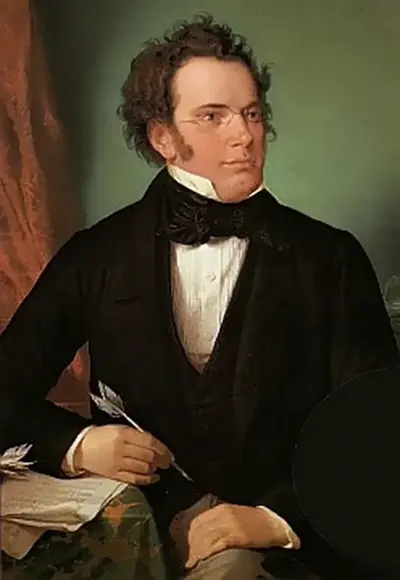
Franz Peter Schubert was an Austrian composer of the late Classical and early Romantic eras. Despite his short lifetime, Schubert left behind a vast oeuvre, including more than 600 secular vocal works (mainly lieder), seven complete symphonies, sacred music, operas, incidental music and a large body of piano and chamber music. His major works include "Erlkönig" (D. 328), the Piano Quintet in A major, D. 667 (Trout Quintet), the Symphony No. 8 in B minor, D. 759 (Unfinished Symphony), the ”Great” Symphony No. 9 in C major, D. 944, the String Quintet (D. 956), the three last piano sonatas (D. 958–960), the opera Fierrabras (D. 796), the incidental music to the play Rosamunde (D. 797), and the song cycles Die schöne Müllerin (D. 795) and Winterreise (D. 911).
