William Laud Quotes
The Lord receive my soul, and have mercy on me, and bless this kingdom with peace and charity, that there may not be this effusion of Christian blood amongst them.
Laud, William. The Works of the Most Reverend Father in God, William Laud, D.D. Vol. 4, John Henry Parker, 1854, p. 438.


While Queen Mary was presenting medals to British soldiers during World War I, she said this to a soldier who had exclaimed “No more bloody wars for me”.


Shelly was a reformer and admired Jesus Christ and his preaching. However, he was an opponent of organized religion and was an atheist himself.


The British Governor was genuinely anxious to avoid bloodshed and the American Revolution. However, the conflict had been brought about by the actions of the British Parliament and the Kings ministers, and Gage did not have the power or authority to alter the issues of the fundamental conflict—taxation, colonial government, economics, self determination. While he offered pardons, in this proclamation he specifically exempted Samuel Adams and John Hancock of whom he said “whose offences are of too flagitious a nature …”


The irony was that it was by warfare that he conquered most of the Hawaiian Islands and formed them into a kingdom.

Starting with the Crusades, the Popes began giving indulgences to those who would die in battle fighting for a holy cause. The Papacy was then at one of it’s lowest points. Two men, Clement and Urban, both claimed the Papacy and each had raised an army to fight the other. Each was promising indulgences to those who would fight, and in a modality similar to the Muslim terrorists of the 21st century, the soldiers were promised ascendancy to Heaven if the fell in battle for such a holy cause. Wycliffe, in a wonderfully original notion, proposed that the people who live in peace be granted the indulgences. See {618086}.


Urging use of force against the South:


Right wing conservatives were not always in favor of large defense expenditures. Prior to WWII most were opposed to defense spending and they were the pacifists. Clark was one of the few that maintained this view after WWII.
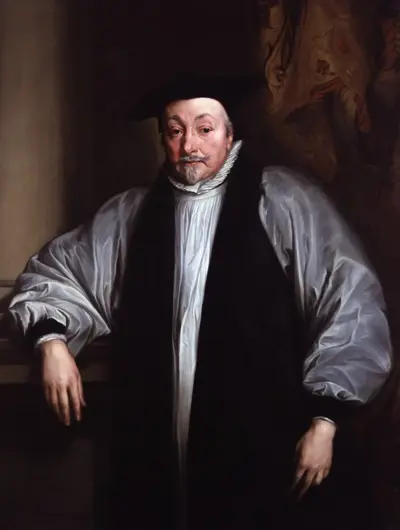
William Laud was a clergyman in the Church of England, appointed Archbishop of Canterbury by Charles I in 1633. A key advocate of Charles's religious reforms, he was arrested by Parliament in 1640, and executed towards the end of the First English Civil War in January 1645.
