Desiderius Erasmus Quotes
The long war of words and writing ends in blows.
Desiderius Erasmus, c. 1466-1536, Dutch Scholar & Theologian
Sourced by: Eigen's Political and Historical Quotations


In this case, he was referring to the situation with the Barbary Pirates who had an incredible extortion racket going in the Mediterranean. If nations would pay them an annual sum each year, they would not attack and seize merchant ships of that country and sell the ships and goods while holding the sailors for ransom. Jefferson favored and authorized war—a naval attack which for many reasons the European nations had not done (they just paid the tribute). Then a peace treaty was finally signed—the first American Treaty.


_0_thumbnail_47x47.jpg "Statue of Robert Hall in Leicester.")
Sometimes it may be BOTH parties who are guilty of injustice.


The general was expressing a principle that is believed to this day by many policy makers, military people and civilians: Once a war has begun, one must not stop it until victory has been attained. It is unacceptable to negotiate an end to hostilities unless the enemy has been badly beaten on the battlefield. There is this view that “honor” would be lost and that enemies and even allies will not respect you and think the nation is weak and fearful. So there would always be extensive pressure to keep on fighting and not negotiate until there is a military dominant position.
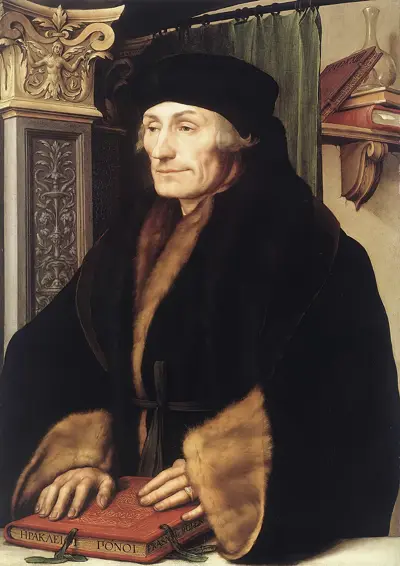
Desiderius Erasmus Roterodamus was a Dutch philosopher and Christian scholar who is widely considered to have been one of the greatest scholars of the northern Renaissance. As a Catholic priest, Erasmus was an important figure in classical scholarship who wrote in a pure Latin style. Among humanists he enjoyed the sobriquet "Prince of the Humanists", and has been called "the crowning glory of the Christian humanists". Using humanist techniques for working on texts, he prepared important new Latin and Greek editions of the New Testament, which raised questions that would be influential in the Protestant Reformation and Catholic Counter-Reformation. He also wrote On Free Will, In Praise of Folly, Handbook of a Christian Knight, On Civility in Children, Copia: Foundations of the Abundant Style, Julius Exclusus, and many other works.
