Elihu Root Quotes
The law of the survival of the fittest led inevitably to the survival and predominance of the men who were effective in war and who loved it because they were effective.
Root, Elihu. "Towards Making Peace Permanent." Nobel Lectures, Peace 1901-1925, edited by Frederick W. Haberman, Elsevier, 1972.


This is a very important quotation. This was not the ravings of a right wing extremist. It was a normative view. This book was a best seller in Germany. This quotation illustrates the mentality of the conservative, militarist, culture that dominated Germany at the time. Racism was normative then in Germany. It was not the Nazis who introduced the concept of inferior races to Germany. Through this book and much before it, the idea was well established in aristocratic, militaristic culture. Also, note that the “inferior races” were considered a threat to civilization, not just inferior beings.


Even today many people find Darwin’s views wanting because of the struggle and survival of the fittest concept implying that all creatures physically battle for survival and existance. But as this quotation illustrated, this was and is a very narrow view of Darwin’s concept of the struggle. Creatures fighting with each other is only a small part of this struggle. Larger parts are adapting to changed climate, versatility in food selection and extremely important a successful breeding pattern. The Thompson’s Gazelle is the most eaten animal on the African plains, and has virtually no defenses, but is an amazing breeder, with the shortest period of gestation of any mammal and the number of pregnancies per year. This little antelopes are thriving while they are eaten by most predators while the Lion, the strongest predator whom no animal will threaten, is becoming extinct.

She was also Australia’s First Woman Cabinet Minister.


This quotation illustrates the bizarre logic used by some war enthusiasts once Darwin’s evolutionary principles received wide distribution. Kellogg explains their notion. The absurdity is that there is nothing that characterizes the soldiers who lived differentially from the soldiers who died. The survivors of a bomb if any are random or determined by position and not intellect, courage, strength or any other trait that might be used selectively. See Kellogg’s explanation {631167}.


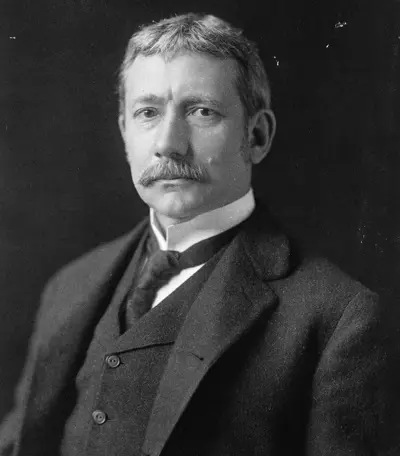
Elihu Root was an American lawyer and statesman who served as Secretary of State under President Theodore Roosevelt and as Secretary of War under Roosevelt and President William McKinley. He moved frequently between high-level appointed government positions in Washington, D.C. and private-sector legal practice in New York City. For that reason, he is sometimes considered to be the prototype of the 20th century political "wise man", advising presidents on a range of foreign and domestic issues. He was elected by the state legislature as a U.S. Senator from New York and served one term, 1909–1915. Root was awarded the Nobel Peace Prize in 1912.
