Vitruvius Quotes
The larch... is not only preserved from decay and the worm by the great bitterness of its sap, but also it cannot be kindled with fire nor ignite of itself, unless like stone in a limekiln it is burned with other wood... This is because there is a very small proportion of the elements of fire and air in its composition, which is a dense and solid mass of moisture and the earthy, so that it has no open pores through which fire can find its way... Further, its weight will not let it float in water.
Vitruvius. Vitruvius: The Ten Books on Architecture. Translated by Morris Hicky Morgan, Harvard University Press, 1914, p. 63.


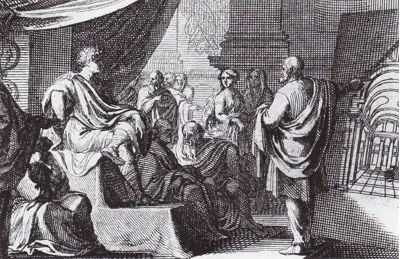
Marcus Vitruvius Pollio (/vɪˈtruːviəs ˈpɒlioʊ/; c. 80–70 BC – after c. 15 BC), commonly known as Vitruvius, was a Roman author, architect, and civil and military engineer during the 1st century BC, known for his multi-volume work entitled De architectura. He originated the idea that all buildings should have three attributes: firmitas, utilitas, and venustas ("strength", "utility", and "beauty"). These principles were later widely adopted in Roman architecture. His discussion of perfect proportion in architecture and the human body led to the famous Renaissance drawing of the Vitruvian Man by Leonardo da Vinci.
