James Bovard Quotes
The key question for many voters is: How much is the candidate offering for my vote?
Bovard, James. Attention Deficit Democracy. Palgrave Macmillan, 2006.


Suggesting an arithmetic problem to be included in California textbooks:. "Supervisors" refer to members of the San Francisco Board of Supervisors, the equivalent to a city council.


Bribing Congressmen was quite common. In those days, money to Congressmen and Senators was not even disguised as campaign contributions. The letters were the short terms for the different agents.


Roosevelt’s first gubernatorial term was shaken by the Stock Market Crash and the Failure of the Banks 1929 and the passivity of the Herbert Hoover administration in Washington in coping with the economy and the Great Depression. Reform of Tammany Hall and other State problems took a back seat to trying to create jobs and stabilize the state economy. The Republican candidate Tuttle could not argue against FDR’s economic policies as he would then have to defend President Hoover who was becoming exceedingly unpopular. So he went after the corruption of the Tammany Hall Machine and Roosevelt’s relative passivity. The voters were ok with FDR’s priorities.

No one had a majority of the Electoral College and the election was thrown into the House of Representatives. Henry Clay was the Speaker of the House, and had a grudge against Jackson. He convinced several of the State congressional delegations to vote for John Quincy Adams, and when Adams was President, he made Clay the Secretary of State, then the most powerful cabinet position. Hence Jackson’s characterization.
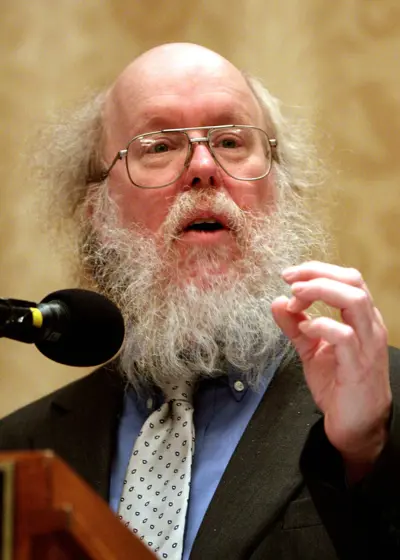
James Bovard (/bəˈvɑːrd/; born 1956) is an American libertarian author and lecturer whose political commentary targets examples of waste, failures, corruption, cronyism and abuses of power in government. He is a USA Today columnist and is a frequent contributor to The Hill. He is the author of Attention Deficit Democracy and nine other books. He has written for the New York Times, Wall Street Journal, Washington Post, New Republic, Reader's Digest, The American Conservative, and many other publications. His books have been translated into Spanish, Arabic, Japanese, and Korean.
