Titus Welliver Quotes
The issue of fracking is a stick in the hornet's nest.
Radish, Christina. "Titus Welliver Talks PROMISED LAND." Collider, 28 Dec. 2012.


Previous governments had attempted to privatize the economy and sold off many of the nationally owned enterprises. Morales, a socialist, began reversing the cycle and “nationalized” the natural gas supply which is plentiful. Bolivia had been getting a very small percentage compared with world standards and Morales renegotiated the percentage for the government, but left the management in private hands. So in that sense he did not “nationalize” the hydrocarbons. The Bolivian mines represented another problem entirely. For years, featherbedding had created tens of thousands of unnecessary jobs for the mining, nut necessary to the people who were employed and the economy. But private operators always wanted to reduce the number of workers to only what was needed. So the nationalization problem was to increase the productivity of the Bolivian mines, maintain the exports of the mined products and maintain the employment---a difficult balancing act.

This quotation on the surface appears to be a clear summary of the scientifically measured negative aspects to coal. However, it was an extremely bitter political quotation. The reason was that West Virginia and the other parts of Appalachia depend on coal for employment—jobs for the residents in a poverty-stricken area where there are few other potential sources for employment. Coal is also a key economic component of the economy in Wyoming. These states regard the reduction of coal as an energy source as one of the most serious political threats to their states and the treat it accordingly. West Virginia has Democratic Senators and congressmen from Appalachia. Wyoming has Republicans. Both exert enormous pressure on their Congressional Party leadership and the White House. With the country and Congress split at the time, Republicans had control of the House, and Democrats, the Senate and the Presidency—by very narrow margins so the leaderships cannot offend anyone in Congress. The result is that there was almost total silence about the huge coal pollution problem, and even in the second decade of the 21st century, where shale natural Gas was extractable in sufficient quantities to totally replace Coal as a fuel source, few in Congress or the administration ever even spoke of adopting a national policy to this effect, much less passed any legislation. During this period many Americans sickened and died as a result of coal every year with no end in sight.
Energy conservation requires chnge and sacrifice in the short term while fracking has few short term difficulties and requires the vast majority of American to do nothing. The extent of medium and long term damages that fracking will cause is yet unknown and is made even more difficult to know by the practice of the oil drilling companies of keeping the chemicals, amounts, and procedures the use for fracking secret.
His assertion that wind energy is less expensive than the fossil fuel alternative is not accurate if one accounts for the costs on the basis of conventional accounting methods. It was at that time more expensive which is why it’s use was limited. However, the existing methods of accounting did not charge the fossil fuels for the environmental degregation that they cause and the cost to society to overcome these or live with them. More important there is no charge to the cost of fossil fuels for the deleterious health effects that their extraction and use cause. Global warming / climate change is not considered at all in the economic analysis.

With this 1894 prediction, the London Times warned that the era’s primary source of transportation energy—the horse—would soon create an environmental crisis.


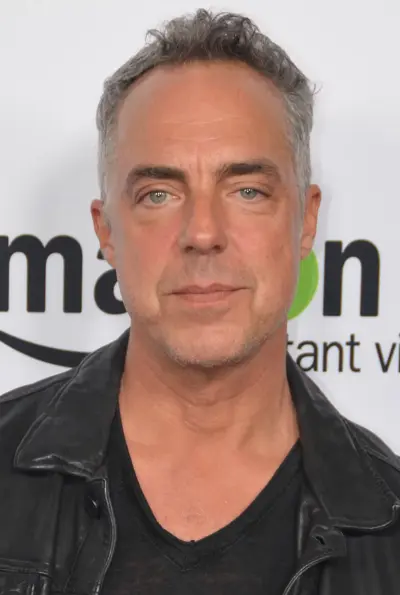
Titus B. Welliver is an American actor. He is best known for his portrayals of the Man in Black in Lost, Silas Adams in Deadwood, Jimmy O’Phelan in Sons of Anarchy, and the title role in the television series Bosch.
