C. Fred Bergsten Quotes
… the individuals who are at the top of the foreign policy hierarchy, both at State and at the National Security Council, tend to be less than sophisticated … about economic issues.
C. Fred Bergsten, Director, Institute for International Economics, Assistant Secretary of the Treasury, Interview with Daniel W. Drezner, Foreign Policy, July / August 2012
Sourced by: Eigen's Political and Historical Quotations

The candidates had remarkably little experience in foreign affairs with the exception of Jon Huntsman and Newt Gingrich who in the extreme right wing ideology driving the Republican primary voters at the time had little chance of winning as they were too far to the left for the Republicans of the time.

Compare to a related sentiment by a former National Security Advisor, Colin Powell.


Harriman was sent to Tokyo to meet with the general.


Samuel Langhorne Clemens, 1835-1910. Ambassadors were often given title of Minister in those days.


The railroads were nationalized for WWI and he ran them all as a government official

King had called for peace negotiations with North Vietnam to include the Viet Cong, ceasing the bombing of North Vietnam, and seating Communist China to the United Nations. These were all contrary to U. S. Policy at the time. They all became U. S. Policy later.

This was meant as a criticism of Webster, but must people saw it as a compliment. What Clarridge and other old hands at the CIA could never get straight was that they were supposed to break the other countries’ laws but not the laws of the United States. They were supposed to lie to other countries, but not to our President and Congress. This has been a constant problem for United States intelligence agencies. Some scholars of espionage believe that a good spy or spy master lies so often that it is part of his nature to do so as well as break laws. Psychologically it is difficult for them not to lie to anyone and they have little respect for laws. Webster fired Clarridge when Webster reformed the CIA but in the process he alienated most of the “veterans”.


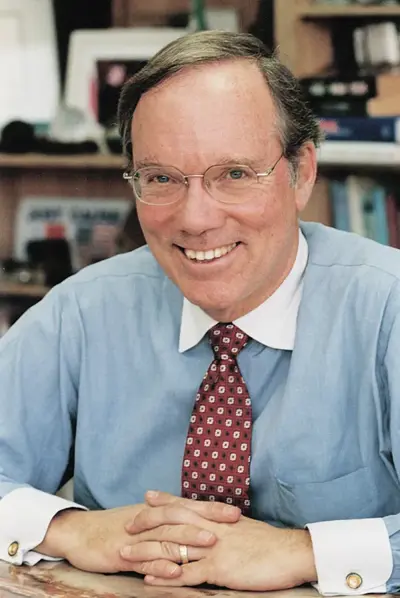
C. Fred Bergsten is an American economist, author, and political adviser. He has previously served as assistant for international economic affairs to Henry Kissinger within the National Security Council and as assistant secretary for international affairs at the U.S. Department of the Treasury. He was director of the Peterson Institute for International Economics, formerly the Institute for International Economics, from its founding in 1981 through 2012 and is now senior fellow and director emeritus. In addition to his academic work, he makes his opinions known to the policy making community and engages with the public with television appearances, writing for influential periodicals such as Foreign Affairs magazine and by writing numerous books.
