Thomas Frank Quotes
The increasing supply of lobbyists should have driven the price of lobbying down, not up. … The most credible explanation … is that clients grew more and more confident that their lobbyists could deliver something of value in exchange for their fees. … The reason companies started buying, in other words, was that Congress began selling.
Thomas Frank, Political Analyst, Journalist and Columnist, How Conservatives Rule, 2008
Sourced by: Eigen's Political and Historical Quotations

Abramoff had bribed over 100 Congressional offices by a combination of campaign donations, paid golf junkets all over the world, free elegant meals at his own fancy Washington Restaurant, free tickets for the Congressmen, their staffs and their major constituents, to Concerts and sporting events including his own Skyboxes, and promises of future employment at very high salaries. Ironically, we was convicted of cheating some of his lobbying clients and did a jail term, but his “bribery” was technically usually legal. In addition to Abramoff, only one Congressman was charged and convicted of corruption, when many if not most had engaged in these corrupt practices. Congress makes the rules with loopholes so that what is bribery and corruption in any other setting is often not against the law if Congress is involved.

ANWR stands for the Alaska National Wildlife Reserve. The oil companies want to drill for oil in the reserve and feel that the risk to the pristine natural area is justified by the value of the oil to the nation. At the beginning of their efforts, they maintained that drilling was "no risk" to the environment. However, after the BP oil spill that did so much damage and could not be controlled for months, most oil companies admit there is some risk, but argue that the benefit is worth it. Opponents do not think the benefit is sufficiently great to risk the wildlife and the rest of the ecology, and some argue that the oil itself is just more fossil fuel that will increase the rate of global warming. The “legal bribery” to which President Carter refers is the loophole in the existing laws and rules of trhe House and Senate which allow members to take money from companies or rich individuals and in return give special access to them and their staffs, provide them with early copies of proposed legislation of committee reports, allows them to draft laws or amendments or statements for their speeches, supports their bids for government contracts, makes inquiries to government agencies on the company’s behalf and provides other services that the company executives will bring them more money that the “campaign contributions” cost them.


This seeming non-sequitur actually has a logic behind it. Flake argues that if the Federal government were much smaller, and spent much less money, rich individuals and companies could not be able to get as much out of government and therefore would not invest large sums of money in lobbyists who, in turn, would then not have the money with which to tempt and bribe congressmen and women.

The Congressman, who had not been previously an enthusiastic leader for this type of reform, found himself with a chance to become Majority Leader of the House of Representatives. The previous leader was under indictment and was linked, along with other Republican Congressman to a Lobbyist who had pleaded guilty to bribing Congressmen. Another Republican Congressman had plead guilty to the felony of accepting bribes. The party that Controlled Congress was fearful of a voter backlash over the corruption—especially the role of lobbyists in giving money to Congressional campaigns. Bainor became a reform leader.


Hollings who was one of the senior experienced senators was offended by the degree to which the George W. Bush Administration and the Republican leadership had turned to lobbyists to draft legislation and amendments to pending legislation. Lobbyists often have specialized information that members of Congress do not have, so there has been in modern times communications between lobbyists and members of Congress and their staffs. However, during the Bush Presidency the practice reached an extreme where lobbyists would even write the legislative language and give it to the members in whom they had invested by giving them large campaign contributions and many perks. K Street is the fanciest street in Washington DC with some of the most expensive office space. A substantial proportion of the lobbyists have K Street offices, hence the metaphor.


A century afterwards, the biggest change was that the price of the Senate seat had gone up and the Political Action Committees had joined the Party Treasuries as the recipients of the money In the early 21st century almost all the Senators were multi-millionaires.
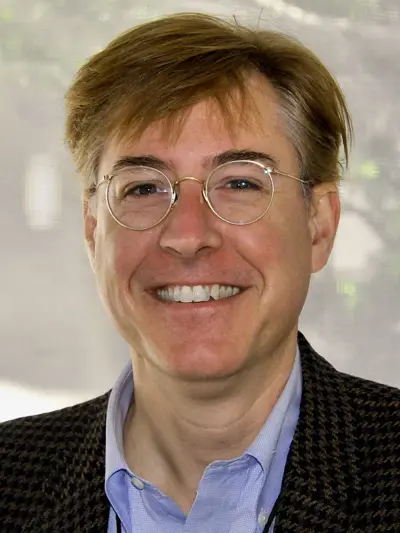
Thomas Carr Frank is an American political analyst, historian, and journalist. He co-founded and edited The Baffler magazine. Frank is the author of the books What's the Matter with Kansas? (2004) and Listen, Liberal (2016), among others. From 2008 to 2010 he wrote "The Tilting Yard", a column in The Wall Street Journal.
