David Irving Quotes
...the incontrovertible evidence is that Hitler ordered on November 30, 1941, that there was to be 'no liquidation of the Jews.'
Irving, David. Hitler's War. Hodder and Stoughton, 1977, p. xiv.


He was a viscious anti-Semite who attracted to his party extreme right wingers, Nazi Sympathers and apologists for the Vichey Franch government. The party was rejected by the majority of French voters, but when his daughter took over the party, she was not an anti Semite but foudn it hard to shake the party's image which was alaysa associated with her name even when she actually kicked her father out of the party.


This classic quote illustrates how rapidly things can change. A decade later most German Jews either emigrated or were murdered.

The historical record that is available shows that while the Pope did not, actively or aggressively oppose Hitler, and he did not discipline Catholic prelates who were Nazi supporters, there is no specific evidence that shows the Pope conspired with Hitler, about the extermination of Jews or anything else. However, most of the relevant documents of the era are in the Vatican and the records have been sealed and have not been visible to historians. Apologists for the Pope’s passivity point out that a large percentage of Germans were Catholic and he had a duty to not antagonize Hitler who would retaliate against German Catholics and the German Catholic clergy and church property. Further, Fascist Italy was under Hitler’s control, and the Vatican itself could have closed and its property seized. The historical record is still very vague.


The assassination was attempted in 1944 and after its failure, he was shot be a firing squad.
The non-violent resistance tactics of the White Rose were so threatening to the Nazi German regime that Sophia and other members were executed by guillotine beheading as a particularly harsh example. The graphic is a postage stamp that Germany has issued in her honor.


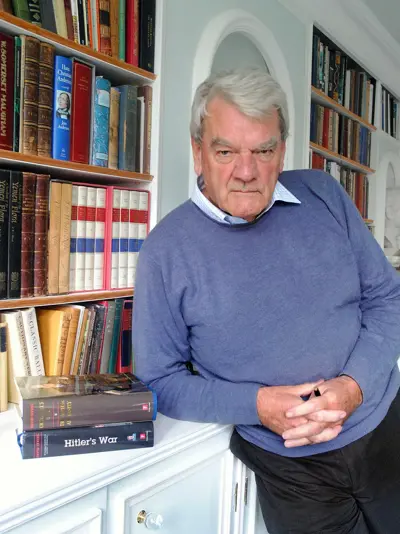
David John Cawdell Irving is an English author and Holocaust denier who has written on the military and political history of World War II, with a focus on Nazi Germany. His works include The Destruction of Dresden (1963), Hitler's War (1977), Churchill's War (1987) and Goebbels: Mastermind of the Third Reich (1996). In his works, he argued that Adolf Hitler did not know of the extermination of Jews, or, if he did, he opposed it. Though Irving's negationist claims and views of German war crimes in World War II (and Hitler's responsibility for them) were never taken seriously by mainstream historians, he was once recognised for his knowledge of Nazi Germany and his ability to unearth new historical documents.
