Mathew Brady Quotes
The honorable senator who introduced the legislation to pay me the $25,000 for my Civil War negative collection demanded half the proceeds, but I will not name the honorable gentleman.
The “gentleman” was Congressman Benjamin Butler former Civil War General, and Governor of Massachusetts who had a corrupt history of looting wealthy Louisiana. Brady had been a very successful photographer and had invested over $100,000 in photographing the civil war with the expectation that when the war was won, the government would buy his collection. They did not and he was financially ruined and had to accept anything the government would offer. Butler arranged the purchase and got the $12,500 kickback which was legal in those days. He became one of the wealthy men of America. Brady died an alcoholic in poverty. Without the Brady photographs, the great Ken Burns PBS documentary of the Civil War could never have been made.
Mathew Brady, 1823-1896, Photographer & First War Photographer, Statement to Civil War artist James Kelly, Quoted in William Styple, Generals in Bronze
Sourced by: Eigen's Political and Historical Quotations

Adams urged paying tribute to the Barbary Pirates who had an incredible extortion racket going in the Mediterranean. If nations would pay them an annual sum each year, they would not attack and seize merchant ships of that country and sell the ships and goods while holding the sailors for ransom. Most of the European powers were paying the annual tribute as they calculated that it was cheaper than patrolling the Mediterranean with warships or going to war with the Barbary States. More important for Adams was that he did not think that the country would support such a military action. See {640847} That was Adams’ thinking. Jefferson however, sent our Navy and Marines to our first foreign war, and they were very effective. However, despite the American military victories, and because of the inability for the European powers to collaborate and share the burden of naval patrol, the United States went back to the craven policy of paying the blackmail. See {640846} & {640848}.


Bribing Congressmen was quite common. In those days, money to Congressmen and Senators was not even disguised as campaign contributions. The letters were the short terms for the different agents.

CREEP in the Nixon Campaign. He was himself a convicted Watergate conspirator. Mitchell did not approve the plan, but did not fire Liddy either.

She was the first Black woman to be elected to Congress and was the first Black woman to actively campaign for the Presidency


It took until the Presidency of Theodore Roosevelt until monopolies were regulated. Like many of the rapacious businessmen of his era, bribery of public officials was so common that he had no problem admitting this to a reporter who was interviewing him. His father Cornelius, one of the great, creative industrialists of America, was not at all of the same mindset or the same corrupt character and saw corporations and the Railroads as having an important role in America with substantial obligations to the society which enabled the economic development and supported the railroads. He described his son as a “blockhead”. William goes down in American history as the arrogant industrialist and capitalist whose wealth was produced by his talent of being born to the right father who built the great empire. At that time the bribery of members of Congress was direct with cash going directly into their pockets, unlike modern times where it is indirect in the form of Campaign contributions.


There were more than 100 million of his gun distributed over the world and his invention has been the instrument by which more people have been killed than any other weapon.

In the letter, he was refusing a donation of five hundred guineas for his efforts in Parliament on behalf of the persecuted Roman Catholics of Ireland. See related quotes.


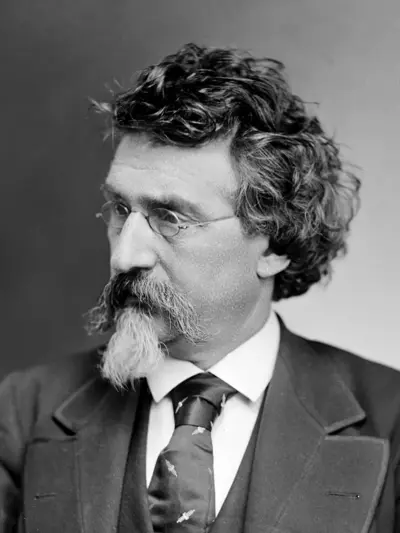
Mathew B. Brady was one of the earliest photographers in American history. Best known for his scenes of the Civil War, he studied under inventor Samuel F. B. Morse, who pioneered the daguerreotype technique in America. Brady opened his own studio in New York in 1844, and photographed Andrew Jackson, John Quincy Adams, and Abraham Lincoln, among other public figures.
