Lysander Spooner Quotes
The greatest of all crimes are the wars that are carried on by governments, to plunder, enslave, and destroy mankind.
Spooner, Lysander. A Letter to Grover Cleveland, on His False Inaugural Address, the Usurpations and Crimes of Lawmakers and Judges, and the Consequent Poverty, Ignorance, and Servitude of the People. Benjamin R. Tucker, 1886, p. 66.


In 1936, Fascist Italy invaded Ethiopia in an effort to obtain an African colony like other European Countries had. Over 50 nations had promised aid to Ethiopia if attacked but then the Italian attacks came, it was not just soldiers with some small artillery and vehicles. Instead it was a full modern army with not only heavy artillery and tanks, but extensive use of air power against villages and towns which generally hardly had rifles. The airplane carnage of civilian populations was a shock to the world. However, the tactics were studied by the Italian German Fascist allies who further developed air power use against unarmed towns and cities in the Spanish Civil war. The aid promised to Christian Ethiopia never materialized because there was a worldwide depression and the great powers would have had to commit to major war—not just send some arms and ammunition. The Ethiopians mostly fought with spears and knives. The Fascists were thus emboldened for the invasion of Europe a few years later.


There had been a Ukrainian coup where the pro-Russian President of Ukraine was ousted and a new Parliament elected that was more inclined to Europe and the West. Unfortunately, several of the key members of the new regime were neo-Nazis. Ukraine had a nasty past where during WWII over 200.000 Ukrainians joined Hitler’s Nazis and fought against the 800,000 Ukrainians fighting with Russia and the Russians. The Ukrainians even ran the only death concentration camp no operated by Germans. Russia used the presence of some Nazis and the passage of the first Ukranian law of the new Parliament that prohibited the use of Russian in Ukrainian schools to come to the “aid” of the ethnic Russians living near the Russian border at the Eastern end of Ukraine who had seized the governments of several areas and forced the Ukrainian officials out and with the help of Russian “volunteers” with Russian weapons, prevented Ukrainian troops from reasserting control. In the struggle there were deaths on both sides of the conflict and these were the “peaceful civilians” who were “annihilated”.

Although a very aggressive military commander, Grant did not approve of proposals to have wars of extermination which many called for against different Native American tribes.

The convoy was heading for the city of Alleppo that had been under siege by the government for weeks. 22 UN Aid Workers were killed and half the cargo was destroyed. Syria had been in a Civil War for a number of years, and the Government of Bashar al-Assad had committed one atrocity after another. A cease fire had been agreed to and the UN notified all parties to the war about the humanitarian convoy’s schedule and route. It was not known whether the government had decided to attack the convoy to put more pressure on the people in Aleppo to end their rebellion or the attack was made by local commanders of government troops who did not want to see the pressure on Aleppo lifted.

This was part of the continual conflict between the Muslims and the Eastern Orthodox Christians. The Greeks ended up doubling their territory.

For years the Nationalist Military under Chiang Kai-shek and other Generals like Ma Hongkui had murdered suspected communist politicians, and in the Civil War with the communists rarely took any prisoners. The Communists in turn, “tried” and executed landlords and other major capitalists who had previously in their view treated the peasants badly and were responsible for much starvation. Neither side had any scruples about ignoring human rights and committing war crimes.


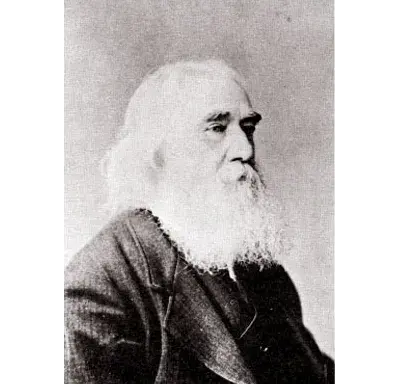
Lysander Spooner was an American individualist anarchist. He was also an abolitionist, entrepreneur, essayist, legal theorist, pamphletist, political philosopher, Unitarian, writer and a member of the First International.
