Lee Iacocca Quotes
The great issues facing us today are not Republican issues or Democratic issues. The political parties can debate the means, but both parties must embrace the end objective, which is to make America great again.
Iacocca, Lee. Where Have All the Leaders Gone?. Scribner, 2007.


Speech from the House Chamber of the Texas Capitol after the Supreme Court had ruled 5 to 4 that his opponent, who had won the popular vote, could not do hand counts on contested ballots. He was trying to unify a very divided country. The statement did much to that end.

After defeating the Federalists, Jefferson tried to unite a politically divided and fractious country:

Theodore Roosevelt was the Presidential nominee


He assumed the speakership at a time of bitter partisanship in Congress and the country much like the beginning of the 31st century. Randall, however put a stop to much of it in the House of Representatives.

After 34 years of serving as one of the most effective Senators, he had just been defeated in his primary election by a hyper partisan Republican conservative extremist who attacked Lugar for his comity and bipartisanship.

This principle of support of Administration foreign policy (even if opposed) when abroad had an enormous influence on both political parties behavior for almost half a century. It began to fall apart with the hyperpartisanship that the Republican’s deep enmity to Democratic President Bill Clinton, and this was retaliated against be some Democrats during the George W. Bush Presidency. It completely disintegrated with the antipathy many very conservative Republicans had against President Barack Obama in the early 21st century. See {633113} for the Senator’s elaboration on the meaning of the policy.


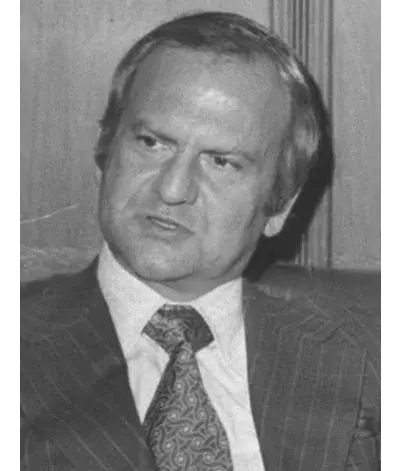
Lido Anthony "Lee" Iacocca was an American automobile executive best known for the development of the Ford Mustang and Ford Pinto cars while at the Ford Motor Company in the 1960s, and for reviving the Chrysler Corporation as its CEO during the 1980s. He was president and CEO of Chrysler from 1978 and chairman from 1979, until his retirement at the end of 1992. He was one of the few executives to preside over the operations of two of the Big Three automakers.
