Jean-Baptiste Say Quotes
The government has, in all countries, a vast influence, in determining the character of the national consumption; not only because it absolutely directs the consumption of the state itself, but because a great proportion of the consumption of individuals is gained by its will and example.
Jean-Baptiste Say, 1767-1832, French economist and journalist, A Treatise On Political Economy: or the Production, Distribution, and Consumption of Wealth
Sourced by: Eigen's Political and Historical Quotations


During the Iraq War, President George W. Bush, cut taxes several times as part of his economic philosophy. The result he claimed kept the economy sound. It also plunged the nation into the highest national deficit in U. S. History.

Previous governments had attempted to privatize the economy and sold off many of the nationally owned enterprises. Morales, a socialist, began reversing the cycle and “nationalized” the natural gas supply which is plentiful. Bolivia had been getting a very small percentage compared with world standards and Morales renegotiated the percentage for the government, but left the management in private hands. So in that sense he did not “nationalize” the hydrocarbons. The Bolivian mines represented another problem entirely. For years, featherbedding had created tens of thousands of unnecessary jobs for the mining, nut necessary to the people who were employed and the economy. But private operators always wanted to reduce the number of workers to only what was needed. So the nationalization problem was to increase the productivity of the Bolivian mines, maintain the exports of the mined products and maintain the employment---a difficult balancing act.
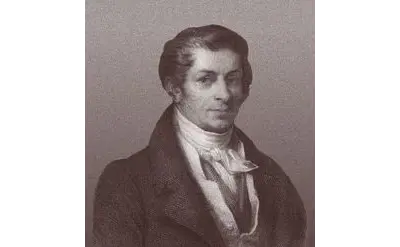
Jean-Baptiste Say was a liberal French economist and businessman who argued in favor of competition, free trade and lifting restraints on business. He is best known for Say's law—also known as the law of markets—which he popularized. Scholars disagree on the surprisingly subtle question of whether it was Say who first stated what is now called Say's law. Moreover, he was one of the first economists to study entrepreneurship and conceptualized entrepreneurs as organizers and leaders of the economy.
