William Jennings Bryan Quotes
The government being the people’s business, it necessarily follows that its operations should be at all times open to public view.
William Jennings Bryan, 1860-1925, U. S. Secretary of State, U. S. Congressman (Democrat, NB), 3 Time Unsuccessful Democratic Presidential Candidate, Speech, City Club of Baltimore, April 24, 1915
Sourced by: Eigen's Political and Historical Quotations
_0_thumbnail_47x47.jpg "Statue of Robert Hall in Leicester.")
For many people the implication of this quotation is that there should be no government secrets withheld from the citizens who have the right to examine. Others argue that government may have temporary secrets to protect against foreign enemies for example, but that these must be declassified very promptly so that the citizens can examine the actions of their government in time to replace the government if they are not satisfied. Almost all government officials tend to reject the first implication out of hand, and grudgingly accept the second with their discretion controlling when declassification should take place. The problem of America is twofold. There is much over-classification (material kept secret that should not be at all), and the time till declassification is long in general and truly absurd in many cases. For example, there are documents from WWII that by 2013 had still not been declassified. See {591444}, {641317}, and {589105} for exemplar views. William Jennings Bryan introduced this principle into the American political dialogue. See {641027}.

There were many critics who were concerned that the ITU was trying to regulate the Internet, but no one could be sure as the proceedings and meetings of the ITU are not publicly available. This is a classic UN problem. They see themselves as representing governments and not people. The Governments have the information and so they delude themselves into believing that they are transparent, when the reality is that for the individual they are totally opaque. Most critics who worry about UN regulation of the Internet, are just as concerned with what other countries are proposing than what there own government’s position is. And most governments themselves do not release the actual transcripts or proceedings of the ITC meetings but only documents giving their positions. This is an example of secrecy being promoted as transparency where the UN covers for member nations who want to maintain secrecy.


The next article itemizes a few exceptions such as national security, but by and large government documents are accessible.


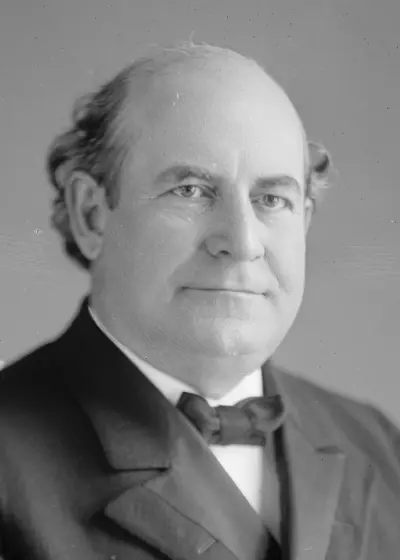
- Born: March 19, 1860
- Died: July 26, 1925
- Nationality: American
- Profession: Lawyer
William Jennings Bryan was an American orator and politician from Illinois and Nebraska. Beginning in 1896, he emerged as a dominant force in the Democratic Party, running three times as the party's nominee for President of the United States in the 1896, 1900, and 1908 elections. He also served in the United States House of Representatives and as the United States Secretary of State under Woodrow Wilson. Because of his faith in the wisdom of the common people, he was often called "The Great Commoner".
