Annie Besant Quotes
The generous wish to share with all what is precious, to spread broadcast priceless truths, to shut out none from the illumination of true knowledge, has resulted in a zeal without discretion that has vulgarised Christianity, and has presented its teachings in a form that often repels the heart and alienates the intellect.
Besant, Annie. Esoteric Christianity, or The Lesser Mysteries. Theosophical Publishing Society, 1901, p. 4.


This seemingly abstruse philosophical statement actually found its way into one of the major political debates of the 21st Century when the Secretary of Defense was defending the management of the Iraq War and the interpretation of intelligence. See {586062}.


The papyrus appears to be an instruction booklet for government officials. The Egyptians thought that thinking and the intellect is done by the heart. In this context we would say, “Don’t let your head get big ….”
Unfortunately, much modern Islamic philosophy and religion sees new knowledge and innovation of ideas as heresy. However, this was not at all true at the beginning of Islam. This narrow-mindedness and intolerance began to develop in 1100, hundreds of hears after Mohammad. Contrast Abu Hanifa with an Islamic modern fundamentalist who claims there can be no valid new knowledge: {620307}.


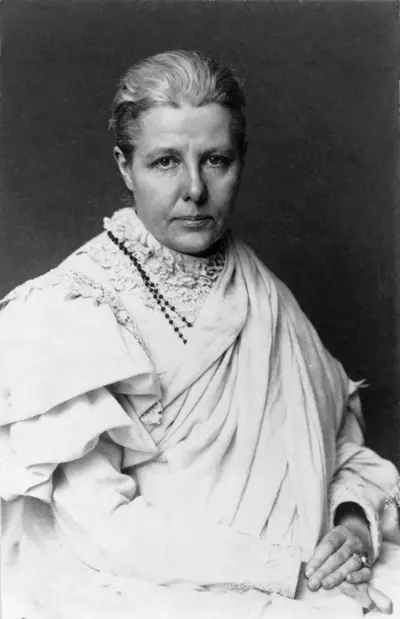
Annie Besant (née Wood; 1 October 1847 – 20 September 1933) was a British socialist, theosophist, freemason, women's rights and Home Rule activist, educationist, and campaigner for Indian nationalism. Regarded as a champion of human freedom, she was an ardent supporter of both Irish and Indian self-rule. She was also a prolific author with over three hundred books and pamphlets to her credit. As an educationist, her contributions included being one of the founders of the Banaras Hindu University. For fifteen years, Besant was a public proponent in England of atheism and scientific materialism. Besant's goal was to provide employment, better living conditions, and proper education for the poor.
