Viktor Orban Quotes
The future or the past - It's very simple: building the future, or a restoration of post-communism.
Orbán, Viktor. Fidesz Party Congress Address. 13 Dec. 2015, Budapest, Hungary.


China was going though a major change of economic structure and national policy, moving to a Western style, capitalist, market economy. This was led by Zhao and Deng. However there were ensconced communist, Marxist idealogues still in place in the government, and a few of them were very vocal about their negative reaction to this abandonment of socialist principles. One economists who was particularly vocal was thus warned and reprimanded by Zhao. He got the message.


The changes he wrought were many and profound and were rejected years later when his party was voted out of office so markedly that the only retained 2 seats in the parliament and lost their status as an official Canadian party.
10 centuries ago was a time when the Arabs were far more advanced and modern than other cultures including the Christian West that was in the Dark Ages. However, in the 12th century there was a “closing”—a narrowing of allowable Islamic thinking, and since then, Islamic people have had great difficulty with change or modernity. Not all Muslim nations are equally rigid but the Arabs are at the extreme among Islamic counties.

The Red Scare had already reached most conservatives and Truman and most others had not yet been affected by the fear of Communism that so many people had through the 1970s.


Many Americans believed that the Communist government of Russia was softening its world revolution doctrine as the Communist government was concentrating on coping with the huge problems they faced. He argued that there was no ideological mellowing. Immediately after the Russian Revolution, the provisional government appointed him as Ambassador to the United States. However, the provisional government was supplanted when the Bolsheviks took over. Not enamored of Communism, he stayed in the United States with many other Russian refugees.
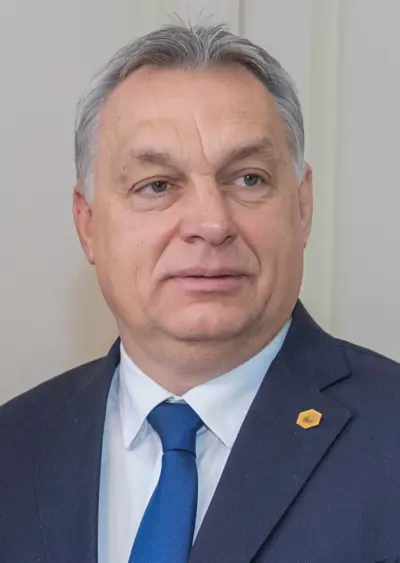
Viktor Mihály Orbán is a Hungarian politician who has been Prime Minister of Hungary since 2010; he was also Prime Minister from 1998 to 2002. He has also been President of Fidesz, a national conservative political party, since 1993, with a brief break between 2000 and 2003. Under his control it became the most centralized, most homogeneous and most disciplined party in Hungarian history. He supervises communications, long-term planning, daily operations, policy direction, and selection of candidates.
