Friedrich List Quotes
The friends of domestic industry should meet annually to prepare the necessary legislation for Congress after discussing the measures and gathering the facts. [This was one of the earliest suggestions for a special interest legislative program.
Friedrich List, 1789-1846, German-American Economist, Speech, The Pennsylvania Society for the Encouragement of Manufacturers and the Mechanical Arts, Philadelphia, PA, November 3, 1827
Sourced by: Eigen's Political and Historical Quotations


Barbour was himself a lobbyist before he became a politician.


Abramoff had bribed over 100 Congressional offices by a combination of campaign donations, paid golf junkets all over the world, free elegant meals at his own fancy Washington Restaurant, free tickets for the Congressmen, their staffs and their major constituents, to Concerts and sporting events including his own Skyboxes, and promises of future employment at very high salaries. Ironically, we was convicted of cheating some of his lobbying clients and did a jail term, but his “bribery” was technically usually legal. In addition to Abramoff, only one Congressman was charged and convicted of corruption, when many if not most had engaged in these corrupt practices. Congress makes the rules with loopholes so that what is bribery and corruption in any other setting is often not against the law if Congress is involved.


He made this quotation when he was a member of the Wisconsin State legislator. He was describing the influence and interaction that corporations had with the Wisconsin state legislative process.


At the time many members of Congress actually allowed the American Petroleum Institute and other special interests who donated enough money to have their representatives draft legislation and markup language. There were enough members of Congress who would not pass any legislation unless the American Petroleum Institute – the voice of the oil industry – was in favor of it.


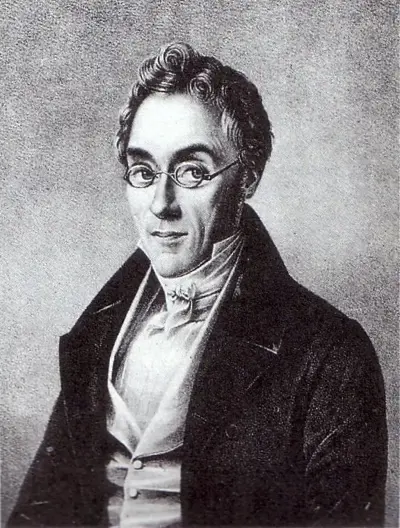
Georg Friedrich List was a German-American economist who developed the "National System" of political economy. He was a forefather of the German historical school of economics, and argued for the German Customs Union from a Nationalist standpoint. He advocated imposing tariffs on imported goods while supporting free trade of domestic goods, and stated the cost of a tariff should be seen as an investment in a nation's future productivity.
