Ralph W. Sockman Quotes
The forgiveness of the world can only be accomplished by the judgment of the world.
Sockman, Ralph W. The Paradoxes of Jesus. Abingdon Press, 1936, p. 210.


He disappeared from the Governor's Mansion and no one could find him for a few days while he, a married man, had gone off with his Argentinian mistress. See {29256}. He refused to resign thereafter.


In 1856 Kansas was at war over slavery. Kansas was to enter the Union with the resident men voting to determine whether it would be a slavery state or a free state. At first pro-slavery forces sent men into Kansas to increase the pre-slavery vote. The abolitionist anti-slavery forces outside of Kansas did the same, and had more money to finance anti-slavery settlers. Soon the pro-slavery forces, realizing that they would be outnumbered turned to violence and began to intimidate abolitionist settlers to return from whence they came. Soon abolitionists were killed and the anti-slavery men retaliated. Soon real war broke out but terrorism was the modality on most attacks as the purpose of the pro-slavery men was to frighten the abolitionists—many of whom were religious pacifists—into leaving the state. Brown and some other abolitionists retaliated with terror of their own, but Brown was rabid. He and his sons, attacked 5 pro-slavery fighters at Pottawatomie Creek, but Brown personally hacked off their limbs with a broadsword and left the bodies to intimidate and terrorize many of the pro slavery people. Brown was such a fanatic that he, in this infamous quote, claimed that his killing and butchery was “justified under the circumstances.” The phrase “Bleeding Kansas” came from the violence and terrorism in this period.


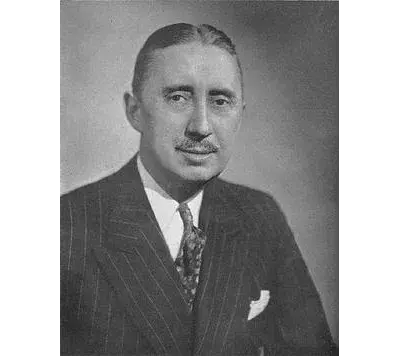
Ralph Washington Sockman was the senior pastor of Christ Church (United Methodist) in New York City, United States. He gained considerable prominence in the U.S. as the featured speaker on the weekly NBC radio program, National Radio Pulpit, which aired from 1928 to 1962, and as a writer of several best-selling books on the Christian life. Time Magazine reported in 1946 that Sockman's National Radio Pulpit program received 4,000 letters weekly, making him "the number one Protestant radio pastor of the U.S. ...rated by volume of fan mail". Fifteen years later in 1961, Time said that Sockman was "generally acknowledged as the best Protestant preacher in the U.S.".
