Fyodor Dostoevsky Quotes
… would not one tiny crime be wiped out by thousands of good deeds?
Fyodor Dostoevsky, 1821-1881, Russian Writer, Crime and Punishment
Sourced by: Eigen's Political and Historical Quotations


The worst war crimes and atrocities of the Civil War took place at Andersonville. 13,000 Union prisoners of war were killed there. Capt, Henry Wirtz, the prison commandant, was tried and executed after the war.


The President refused since Lyon himself had not apologized and asked for forgiveness.

Advising the Roman Senate to place even greater powers in the hands of Pompey: Marcus Porcius Cato Uticensis

This law is used to free “honor killing” murderers who have killed female relatives for what they thought was a sexual transgression that “stained the family honor.” The custom exists in some other countries but rarely with such sanction of law. In the case of Article 548 the word “witnesses” is interpreted to mean “heard about it” or even has some reason to suspect it. Each year in Syria hundreds of innocent women, and even girls are killed with impunity. In one 2007 case a 15 year old girl was kidnapped and raped. When she was freed by the police she was jailed. A cousin got her released by agreeing to marry her, but after the marriage, one of her own brothers, with the knowledge and concurrence of the rest of the family, butchered her with a knife. The family then held a party to celebrate the cleansing of their honor.


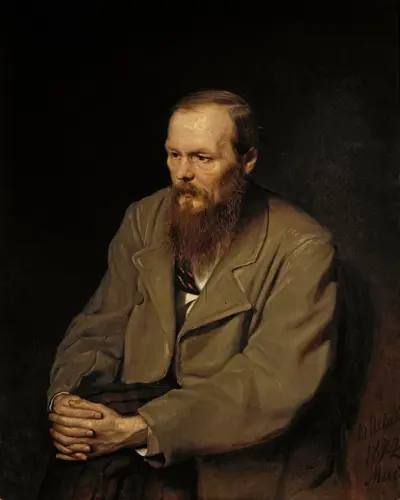
Fyodor Mikhailovich Dostoevsky, sometimes transliterated as Dostoyevsky, was a Russian novelist, philosopher, short story writer, essayist, and journalist. Dostoevsky's literary works explore human psychology in the troubled political, social, and spiritual atmospheres of 19th-century Russia, and engage with a variety of philosophical and religious themes. His most acclaimed works include Crime and Punishment (1866), The Idiot (1869), Demons (1872), and The Brothers Karamazov (1880). Dostoevsky's body of works consists of 12 novels, four novellas, 16 short stories, and numerous other works. Many literary critics rate him as one of the greatest psychological novelists in world literature. His 1864 novel Notes from Underground is considered to be one of the first works of existentialist literature.
