Albert Kesselring Quotes
The fight against the partisans must be carried out with all means at our disposal and with utmost severity. I will protect any commander who exceeds our usual restraint in the choice of methods in executing one's orders is better than failure or neglect to act.
He signaled his subordinates that it was OK to commit war crimes against the Italian Partisans.
Albert Kesselring, 1885–1960, German Air Force General and Field Marshall, June 17, 1944
Sourced by: Eigen's Political and Historical Quotations

This is the classic war crime of collective punishment.

Germany had invaded and occupied much of Europe. These two fronts accounted for the majority of the German casualties. The Germans not only violated the Geneva Convention and the Laws of War repeatedly, but as you can see from this quotation, it was deliberate policy. Keitel was tried and hanged after the war. See {621438} .


Hamas had fired thousands of rockets and other missiles at Israeli population centers—war crimes under the Geneva Conventions. Israel finally retaliated against Hamas facilities in Gaza. However, in an unprecedented effort to avoid civilian casualties, the Israeli Defense Forces warned the people by indicating which targets they were going to strike. They also dropped leaflets in Arabic telling the civilians that they are not the targets but to try and avoid harm to them and their families, they should evacuate the neighborhoods that would be under attack. Hamas had placed their missile launchers and other weapons in and near schools, hospitals, mosques and civilian housing risking their civilian population—see {640841}.

In WWII the Germans bombed London causing many civilian casualties. In retaliation, the allies bombed German cities such as Hamburg and others. The resolution’s effect was very short lived. There are similar restrictions in the Geneva Conventions but again, if one side breaks the conventions, most other sides will retaliate. Note that in the 3rd condition, the one that is most contentious in the 21st century “negligence” is the operative word. An error or mistake is not necessarily or even usually negligence. Many people believe that international law prohibits the bombing of civilians from reading 3) and similar statements from treaties. However, an honest error, mistake or equipment malfunction which kills


The Nazis occupied the cities, but the partisans survived in the mountains. The resistance was ferocious and very effective. From a German Soldier’s point of view, the Yugoslav front was the most dangerous assignment where his odds of being killed was even greater than the Russian front.


On March 9-10, 1945, over three hundred B-29 Superfortresses loaded with 2,000 tons of incendiary bombs flew over Tokyo bombing the city in waves for 6 hours. Over 250,000 buildings were destroyed and more people were killed than would be in either Hiroshima or Nagasaki which were destroyed by atomic bombs. See {615730} and {615733}. The technique called area bombing was then implemented on Japanese cities 66 more times. Stimson was seriously worried that there would be no large targets in Japan left on which the dramatic effect of the atomic bomb could be demonstrated. And without such a demonstration, there would not be a likely Japanese surrender as all the devastating conventional bombing had not persuaded the Japanese. A land invasion with perhaps millions of casualties might be required.

Calley was the officer who gave orders to kill men, women and children of My Lai, a Vietnam village which Army intelligence felt had been sympathetic and given help and assistance to the Viet Cong. Calley was convicted by Court Marshall, but was released after serving a very light sentence. No one above Cally was held in any way responsible.
This has been true in just about every conflict. In WWII however, there were a highly disproportionate ration of atrocities with those of the axis forces dwarfing those of the U. S. and its allies. Further, after the war, those allied atrocities that did take place were published. In addition, one basic difference is in the policies of the fighting forces and their governments as opposed to individual actions by soldiers. In WWII, the allied atrocities were of the latter type, but the axis atrocities involved both.


Prior to this order, some German submarines had assisted the survivors of torpedoed ships. None did after and some actually machine gunned survivors in the water. One aspect of the quotation that is particularly interesting was the Admiral’s justification example of the Allied bombing of German Cites. What he did not say was that this practice did not begin until Germany—at the insistence of Hitler—ignored the Geneva Conventions and bombed London, Coventry and other English cities. Hitler declared London an “Open City”. The Allies retaliated by bombing factories that were in German Cities. After the war Donitz was found guilty of Unrestricted Submarine Warfare and using thousands of slave laborers in his shipyards. He was sentenced to 10 years, one of the lightest sentences if the German War Crimes Trials.


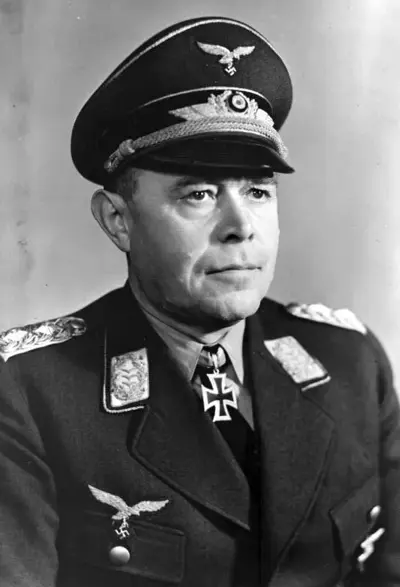
Albert Kesselring was a German Generalfeldmarschall of the Luftwaffe during World War II who was subsequently convicted of war crimes. In a military career that spanned both world wars, Kesselring became one of Nazi Germany's most highly decorated commanders, being one of only 27 soldiers awarded the Knight's Cross of the Iron Cross with Oak Leaves, Swords and Diamonds.
