Charles Eastman Quotes
The family was not only the social unit, but also the unit of government
By “family” he meant the extended family—the clan—which in most Native American Tribes was the unit of government, economics, and social relationships. Most of the clan memberships were matriarchal in definition—a male marrying a woman of anther clan tended to become a member of her clan, and the children almost always did. The leadership tended to be Patriarchal. See {441932}. One of the reasons that the Native Americans could not withstand the European expansion is that it was very difficult for most clans to form strong alliances with common government, command and control. The Iroquois were the notable exception.
Charles Eastman,1858-1939, Santee Dakota Indian physician, writer, lecturer, & reformer, The Soul of the Indian
Sourced by: Eigen's Political and Historical Quotations


This sentiment is expressed in the constitutions of several /Middle Eastern states.


This was an amazingly controversial quotation. At first glance it seemed like a typical position that a very conservative, anti-government politicization might take—the government should not interfere with a parents bringing up their children. However, there was a more ominous part of the quotations. While everyone in America would certainly agree with Paul that the Government does not “own” the children, there are few who would agree with the point that follows—that the Parents “own” the child. Paul reveals the normally hidden aspect of his politics—that he is highly influenced by the extreme, Biblical Literalist Fundamentalist Christians and Jews. In the Old Testament, the Father really did OWN the child. The latter was his chattel. A father had the legal and duty-bound power of life and death over his children. Most American Christians and Jews have long since abandoned the literal biblical notion of children being owned by a father and today see a child as a person who can sometimes need the protection of the state just like any other citizen. And there are occasions where the child must be PROTECTED from the parents who may be acting within their fundamentalist notions of Biblical rights and duties, but not with their civil rights and duties. Ownership, of a child is not one of the modern civil rights of parents.


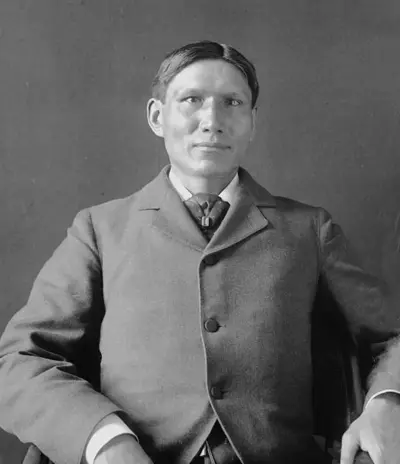
- Born: February 19, 1858
- Died: January 8, 1939
- Nationality: Native American (Sioux)
- Profession: Author
Charles Alexander Eastman was a Santee Dakota physician educated at Boston University, writer, national lecturer, and reformer. In the early 20th century, he was "one of the most prolific authors and speakers on Sioux ethnohistory and American Indian affairs."
