Frank B. Kellogg Quotes
The fact that so many of your people are today residents and citizens of the United States, lending their influence to our civic and economic life, which has meant so much to our development.
Kellogg, Frank B. "The Renunciation of War." Nobel Lecture, 11 Dec. 1930, Norwegian Nobel Institute, Oslo. Nobel Lectures, Peace 1926-1950, edited by Frederick W. Haberman, Elsevier Publishing Company, 1972.


This is a complaint similar to that made by anti-immigrant Americans. France, like most other countries of the world, has never had the large scale immigration of today, nor have they had such a large proportion of the same ethnicity at once—in this case, Muslim North Africans. There were never, before the last decades, enough immigrants of any ethnicity in France to have a choice of maintaining their traditional languages and culture and not learning French or otherwise assimilating. America, in contrast, had large immigrations of different ethnicities, and despite the erroneous beliefs of immigration opponents, these blocs of immigrants have wherever there was sufficient density—usually cities, they maintained their old language and other customs. However, their children and the next generation in almost all cases have abandoned the language and many of the customs of the old country. This was true of the Germans, the Irish, the Italians, the European Jews, the Russian Jews, the Scandinavians’, and the Hispanics with their different cultures.


This is the origin of the “melting pot” term. Although British, Zangwill wrote this play for America and it was first produced in Washinton DC with Theodore Roosevelt in attendance. The theme was just the concept that most Americans think of relative to the large immigration of so many peoples to America.

Input on the question of immigration, said while a scholar at Princeton


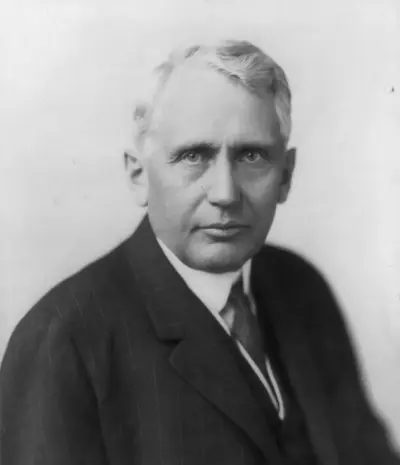
Frank Billings Kellogg was an American lawyer, politician, and statesman who served in the U.S. Senate and as U.S. Secretary of State. He co-authored the Kellogg–Briand Pact, for which he was awarded the Nobel Peace Prize in 1929.
