Douglas Slocombe Quotes
The Eyemo was heavy and could be noisy. Once, I was in an auditorium filming a speech made by Goebbels when, suddenly, it decided to emit a huge snarling sound. Goebbels froze, and hundreds of uniformed Brownshirts turned and glared at me in anger. It was not a comfortable moment.
Norman, Neil. "Douglas Slocombe: The Indiana Jones cinematographer on shooting Nazis and avoiding death by a fraction of an inch." Daily Express, 18 Apr. 2014.


The Germans were planning to use the 1936 Olympic Games in Berlin as a propaganda platform for their Nazi approach. Their perverse notion that the German Arayans were the most superior people and Blacks, Jews, Gypsies at the lower end of the spectrum was called into question by the fact that two of their own champions were Jewish. Goebbels gave orders that no newspaper could mention that fact. Mayer refused to participate. However the Nazi plan backfired when Jews and Blacks won many of the medals. Jessie Owens of America alone won 7 Olympic medals. Adolf Hitler, in order to avoid the “embarrassment” of shaking hands and congratulating Black and Jewish winners, refused to meet any of the athletes.

The coup started with the takeover of a large German Beer Hall where the political leaders of Bavaria were holding a meeting. Hitler and his Brownshirt thugs burst into the Hall. Hitler jumped up on a chair and shouted this statement waving a pistol in the air. Hitler was bluffing however, At the time he did not have the police or army supporting him, although they did soon after. This was the beginning of Hitler’s rise to power, the ruination of Germany, and tragedy for the world.

Ford was a great admirer of Adolf Hitler who thought Ford was the greatest of the Americans. He was an inveterate Fascist—racism and all. He vehemently opposed United States entry into WWII against the Nazis. He was awarded a medal by Hitler, and he had no qualms about taking it.


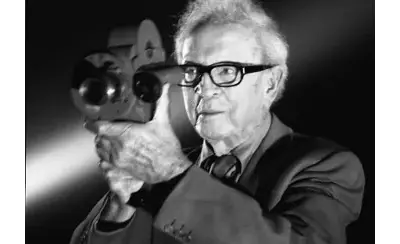
Ralph Douglas Vladimir Slocombe OBE, BSC, ASC, GBCT was a British cinematographer, particularly known for his work at Ealing Studios in the 1940s and 1950s, as well as the first three Indiana Jones films. He won BAFTA Awards in 1964, 1975, and 1979, and was nominated for an Academy Award on three occasions.
