Chester A. Arthur Quotes
The extravagant expenditure of public money is an evil not to be measured by the value of that money to the people who are taxed for it.
Chester A. Arthur, 1830-1886, 21st President of the United States (Republican, OH), Veto message of Rivers and Harbor Bill, 1882
Sourced by: Eigen's Political and Historical Quotations


Although the Professor was often right about this technique, at the time he made this statement, the Clinton administration was actually cutting spending and using much of the revenue to pay for the deficit—just the opposite of what the Professor was worried about. It was successful and the deficit was eliminated and surpluses were projected. However the succeeding administration more closely followed the professor’s pattern and increased spending enormously for serious needs, but also cut taxes, so that we went during the Bush administration from the largest projected surplus in American history to the greatest deficit in American history.


This quotation is attributed to the Senator by hundreds of sources, many very relaiable. This indicates to us that it was a line he used on several occasions. However the Dirksen Center staff has not been able to find the quotation amongst his writings and his radio and television appearances that they have transcripts for.


by deficit spending and borrowing.


This is a an interesting political and historical quotation because it shows how left and right gets redefined in each age. Here we have a quotation of two sentences. By 21st century American definitions, the first statement would line Say up with the Right Wing. The second clause of the second sentence could have been written by an extreme Marxist and would be Left Wing. Definitions and norms change and individuals even change their positions as they have more experience and reflect more on their views.
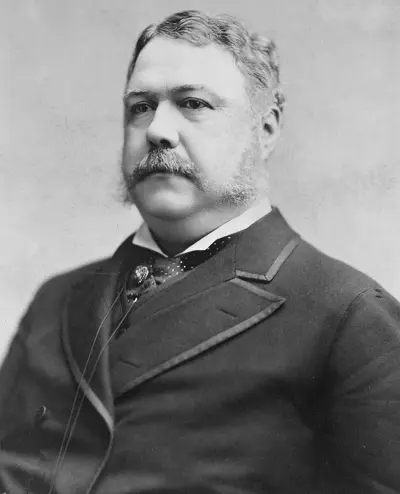
Chester Alan Arthur was an American attorney and politician who served as the 21st president of the United States from 1881 to 1885. Previously the 20th vice president, he succeeded to the presidency upon the death of President James A. Garfield in September 1881, two months after Garfield was shot by an assassin.
