Myron Scholes Quotes
The experience of the '90s, whether it's the '94 peso crisis or the '97 crisis in Asia, the '98 crisis, even the 2001 crisis, is that we recovered pretty readily. There wasn't great consequence.
Solomon, Deborah. "Risk Mismanagement." The New York Times Magazine, The New York Times Company, 16 Aug. 2009.


Major bankers were not only clueless in the Meltdown of 2008 and the Great Recession that followed, but they were equally hapless in the Market Crash of 1929 and the Great Depression thereafter.
The Chairman of the Federal Reserve Board, creatively found alternatives that the Fed had never used before and almost all experts did not even realize that were possible. He and Treasury Secretary Paulson, almost certainly saved the American system of capitalism. But in the process, they in the early stages and Bernanke throughout the crisis took a number of steps to save the system where the very people and companies whose actions had triggered the entire crisis seemed to personally benefit while most Americans were hurt badly and none of them received any immediate personal benefits the way the large bankers did. The amount of money that Bernanke and his Federal Reserve Board associates spend was staggeringly large and that too distressed many Americans. Almost all of the money was actually returned to the taxpayers as a result of the work of the Fed and the Treasury officials, but no one could feel good about the unfair disparity that had so benefitted much of Wall Street particularly and Main Street and the rest of American only generally while so many lost their jobs, their homes, their dignity and their hopes. Only the big banks and bankers also got a personal huge windfall of taxpayer money and took no risk for that. The alternative would have ruined everyone and even have been worse for the average citizen.

The speech was actually drafted by Peter Jay, his son-in-law and a journalist. The leader of the left-wing Labour party, to the surprise and anger of many of the party stalwarts, was repudiating Keynesianism which had been basic to the party for years. This appears to be the first specific statement that a government cannot spend its way out of a recession. Conservatives have used it ever since in countries throughout the world. The truth of the Keynes proscription is in constant modern economic and political debate with no resolution likely soon.
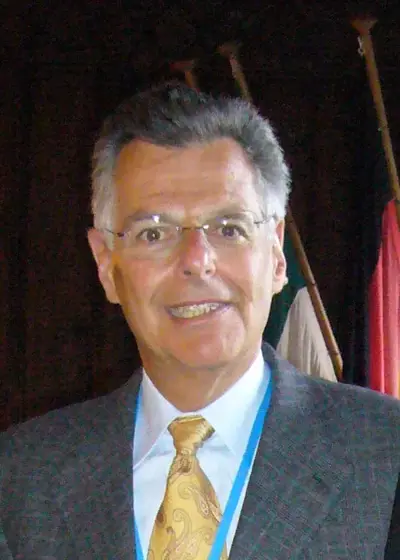
Myron Samuel Scholes is a Canadian-American financial economist. Scholes is the Frank E. Buck Professor of Finance, Emeritus, at the Stanford Graduate School of Business, Nobel Laureate in Economic Sciences, and co-originator of the Black–Scholes options pricing model. Scholes is currently the chairman of the Board of Economic Advisers of Stamos Capital Partners. Previously he served as the chairman of Platinum Grove Asset Management and on the Dimensional Fund Advisors board of directors, American Century Mutual Fund board of directors and the Cutwater Advisory Board. He was a principal and limited partner at Long-Term Capital Management and a managing director at Salomon Brothers. Other positions Scholes held include the Edward Eagle Brown Professor of Finance at the University of Chicago, senior research fellow at the Hoover Institution, director of the Center for Research in Security Prices, and professor of finance at MIT's Sloan School of Management. Scholes earned his PhD at the University of Chicago.
