Kenneth M. Pollack Quotes
The Europeans are starting to show that they're finally serious about the Iranian nuclear program, and they appear to be willing to use sticks against Iran. So I think it is imperative that the United States sit down with the Europeans and say, "Let's make this very clear to the Iranians. Either they can give up their nuclear program and their support for terrorism, in which case we'll given them all kinds of benefits. Otherwise, we'll join in comprehensive, multilateral sanctions that will cripple their very fragile economy."
Gilson, Dave. "The Persian Puzzle." Mother Jones, 30 Nov. 2004.


In the Chinese Civil War, the Communist forces under Chairman Mao had ousted the Kuomintang forces from the mainland. Most of the Kuomintang army retreated to Formosa and established Nationalist China. But an entire Kuomintang army moved into Burma without any consent of the Burmese. In effect, they had invaded. The Kuomintang army was stronger than the entire Burmese army and in effect controlled whatever part of the country they wished to. Further, they were growing opium poppies and were deep in the illegal international drug trade. Burma asked the UN to pressure Chaing Kai Chek and the nationalists on Formosa to transport the army out of Burma and to Formosa. However, the American conservatives were staunch allies of the Nationalists and blocked any efforts to pressure them to do anything which they did not wish to do. So the US official policy was that the Nationalist troops should be withdrawn but there was little pressure behind the policy. Thein, observed that solution could be easy of the United States so wished it. Finally, the troops were withdrawn and Burma was free.

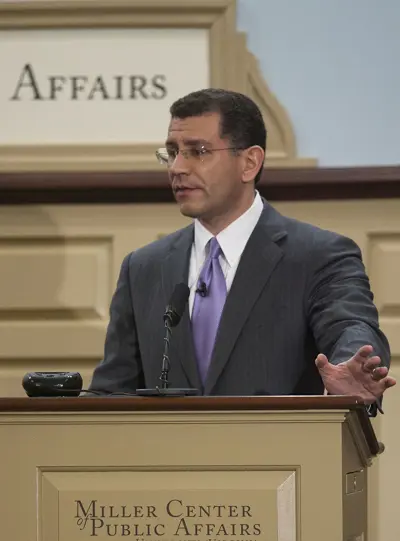
Kenneth Michael Pollack (born 1966) is an American former CIA intelligence analyst and expert on Middle East politics and military affairs. He has served on the National Security Council staff and has written several articles and books on international relations. Currently, he is a resident scholar at the American Enterprise Institute, "where he works on Middle Eastern political-military affairs, focusing in particular on Iran, Iraq, Saudi Arabia, and the Gulf countries. Before that he was Senior Fellow at the Saban Center for Middle East Policy at the Brookings Institution and a Senior Advisor at Albright Stonebridge Group, a global business strategy firm.
