Richard Henry Lee Quotes
The English language has been carefully culled to find words feeble in their nature or doubtful in their meaning.
Richard Henry Lee, 1732-1794, Member of the Continental Congress, Signer of the Declaration of Independence, U.S. Senator (VA), Description of the Bill of Rights
Sourced by: Eigen's Political and Historical Quotations


At the time, one of the favorite right wing accusations that the media were all biased in favor of liberal points of view. Any time a news story was covered that implied or showed that right wing ideology might be wrong, the conservatives would cry “liberal bias” without addressing whether the objection was sound or not. Often the most extreme right wing views are ideological and flaunt reality. Colbert turned this into a very funny phrase.

Accusing her of being a fellow traveler with Communist sympathies, Nixon called her "the Pink Lady" and said she was "pink right down to her underwear." See {627826} and {619498}. Douglas and her campaign thought the accusations were so absurd that at first they did not even bother to respond. Nixon repeated the them and stayed “on message” and by the time that Douglas, who had opposed communism all her life, was believed to be one or at least a “fellow traveler” by most Californians—and finally she responded with statements like this, but it was way too late to turn public perception around. She awarded Nixon the derogatory nickname “Tricky Dick” which the majority of the public used for him throughout his career--{600036}.


In the beginning of the Cold War, the Communists of the world frequently attacked the United States for its Racial Segregation and Discrimination before the Civil Rights Bill was passed. It was one of the great shames and weaknesses of America as slavery had been earlier. Southern racists then conflated the civil rights issue and Communism. Since all communists seemed opposed to segregation, then it followed, they erroneously reasoned, that all opponents of segregation were communists. See {622175} for another of Helms vicious smears using this twisted logic.

by stopping all interest payments on Federal Debts. because Jefferson would dismantle the Navy. Hamilton, a Federalist was supporting John Adams for a second term, and created lies that made the 2012 Republican prevarications against Barack Obama seem like innocent fibs. These 3 lies covered the areas which candidates ever since have gotten mileage out of attacking the opposition. 1) He is fiscally irresponsible and would ruin the economy. 2) He does not support the Constitution. 3) He is unpatriotic and would weaken the military. These have been the 3 favorite areas for lying about an opponent ever since. As in {629237} each of the lies has a grain of truth in it to make it more believable. Jefferson had been an opponent of the Federal Government assuming the States’ Revolutionary War debts, but he never favored defaulting on the interest after the debt was assumed and when elected always paid the interest. Jefferson was representing the United States in France when the Constitutional Convention was held and was not a part of its creation. He was critical of parts of the Constitution and was one of the many who demanded that a Bill of Rights be added. Therefore Hamilton claimed he was against the Constitution. Jefferson was opposed to a standing professional army. It turned out that when he was President. he not only built up the Navy but used it to attack the Barbary States who were assaulting our ships. These were just the biggest lies; the Federalists had many more, and Hamilton enumerated several in this article.


The committee was discussing gun control legislation. Cruz, in national office for only a few weeks, opposed any form of Gun Control, and proceeded to lecture Senator Feinstein on the meaning of the 2nd and other Amendments to the Constitutions. Cruz had never even had a legislative proposal voted upon and his explanation was sophomoric—especially to Senator Feinstein who was the Chair of the Judiciary Committee with great experience and expertise in Constitutional issues and had passed many pieces of major legislation and countless others that she sponsored. Her rejoinder was a classic put down. See {631720} for a columnist’s characterization of Cruz.


Even leading Soviet officials were critical of the Stalin era and Stalin’s brutal, dictatorial methods.

Senator Church was the chairman of the committee. It’s reports (14 in all) are the most extensive documentation of U. S. intelligence ever compiled.


Franklin himself was a great writer and publisher. However Paine was so extraordinarily great as a writer that he not only expressed the basic ideas of the Founding Fathers and the ideals of the American Revolution better than anyone else, but his “Common Sense” was not only an intellectual, critical, political, and propaganda success, but it was the best selling publication in America. Imagine a political tract of today outselling all the novels, dictionaries and Bibles. Arguably, “Common Sense” was the greatest commercial publication in American history. No single, specific publication since has reached a greater proportion of citizens of the nation. And it was sold commercially, not given away.

This is a woderful example of the brilliant use of language. In response to a typical question literati are asked about reading recomendations for Presidents, he makes a seeiming innocuous recomendation that is withering in his criticism of President Donald Trumps dislike of reading anything extensive and detailed and his penchant for tweeting. It is insulting but very subtly so,

Griffin was fired by CNN as a result of her inappropriate behavior.


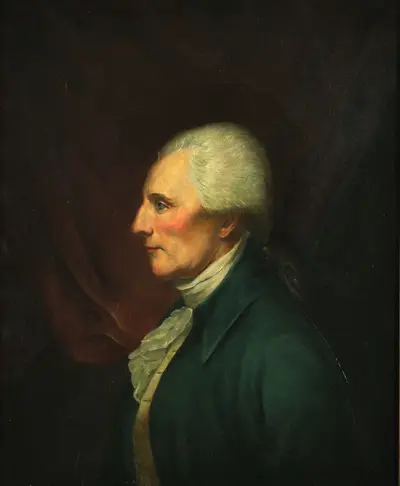
Richard Henry Lee was an American statesman and Founding Father from Virginia, best known for the June 1776 Lee Resolution, the motion in the Second Continental Congress calling for the colonies' independence from Great Britain leading to the United States Declaration of Independence, which he signed. He also served a one-year term as the President of the Continental Congress, was a signatory to the Articles of Confederation, and was a United States Senator from Virginia from 1789 to 1792, serving during part of that time as the second President pro tempore of the upper house.
