John Dewey Quotes
The demand for liberty is a demand for power, either for possession of powers of action not already possessed or for retention and expansion of powers already possessed.
Dewey, John. "Liberty and Social Control." The Social Frontier, vol. 2, no. 2, Nov. 1935, p. 41.


Madison was defending the proposed Constitution against a vocal minority who complained that the Federal government would be dominant over the States and the large cities. Madison pointed out that it was people who fought the Revolution and sacrificed for it, not States or political entities. The Constitution was to be for the people, not the existing governmental entities. It was for Americans and not for local politicians. The “State’s Rights faction lost the debate, and the Constitution and Bill of Rights was adopted. That is why this quotation is so important. The slavery enthusiasts, racists, and others have constantly tried to diminish the Federal supremacy even to this day.


Justifying selling part of the reservation as a waste dump to the distress of neighbors:

In 1937 the U. S. Treasury Department commissioned a pair of large murals to decorate the lobby or the Ariel Rios Federal Building in Washington DC. On the mural was depicted a U. S. Mail Service from Alaska to Puerto Rico. It showed four Puerto Rican women reading a letter in the Inuit dialect presumably delivered from Alaska. The authorities loved the mural until they discovered the translation of the Inuit letter. This was a direct reference to the Puerto Rican Nationalist Independence Movement. That year 18 Puerto Rican Nationalists were killed and over 100 wounded when police fired into a crowd of demonstrators on March 21. Kent, a famous artist, planted a newspaper story with the translation and soon media all over the company were drawing attention to the Puerto Rican movement, just as Kent had intended.
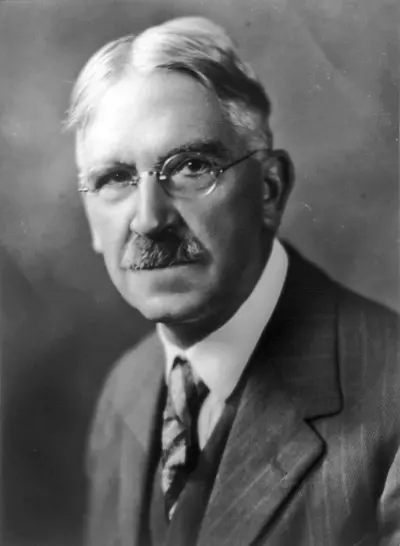
John Dewey was an American philosopher, psychologist, and educational reformer whose ideas have been influential in education and social reform. He was one of the most prominent American scholars in the first half of the twentieth century.
