Joseph Stalin Quotes
The death of one man is a tragedy. The death of millions is a statistic.
There's no proof that Stalin ever said this, but if he did, he would likely have been quoting a 1932 essay on French humor by the German journalist, satirist, and pacifist Kurt Tucholsky who wrote in a fiction story: "The war? I cannot find it to be so bad! The death of one man: this is a catastrophe. Hundreds of thousands of deaths: that is a statistic!".

{627488} is an earlier quotation by a French Diplomat of very similar sentiment, but it is not known if Stalin had ever seen it. Also See Beilby Porteus {627489} for an 18th century variation. This is a puzzling phenomenon. In the United States if there is a plane crash and a hundred people are killed, it is page one and television lead news. But between 40,000 and 50,000 Americans die each year, one or two at a time in auto crashes, and it does not seem to be news. More American college students commit suicide (about 1200 a year) then are killed in mining or other industrial accidents, but the former we rarely hear about.

Republican Congressmen Mark Foley had been forced to resign for inappropriate sexual advances to Congressional pages and the party leadership had allowed the story to be covered up. The story was the largest issue covered by the media almost to the exclusion of all other stories including the genocide in Darfur, Sudan.

This may have been the origin of the famous Stalin later quotation of very similar sentiment {616657}. No one is certain if Stalin had ever seen this work. Or he might have come upon it independently. The original source does not mention Massigli by name. However the description of the “Diplomat vom Quai d’Orsay” fits Massigli and his expertise so we attribute it to him. However, he was not the first to express this idea. The Anglican Bishop of London, Beilby Porteus, appears to have been the earliest—See {627489}.


To this day there is a large stature of Montecino prominent in the skyline of Santo Domingo.


Many cultures and nations, even after a century will not admit to the human rights violations that previous governments might have committed. Most dramatic is the Turkish government's not even allowing studies or discussions about the organized government mass murders of citizens of Armenian extraction—–the so called "Armenian Genocide ", but even in his native Poland there was and has been little admission of those Poles who collaborated with Hitler and the Nazis in the murder of millions of polish citizens and stole the residences, farms and other properties of Jews and other Poles who the Germans sent to concentration camps and even for the few who survived threatened them with death when they returned to reclaim their own property. Most modern societies have great difficulty coming to grips with police brutality and often denying that it is an endemic problem as opposed to one or two "bad apples".


This was tragically only the deaths to that date. Many more were murdered later. The Christian Armenians, a minority in Turkey and its lands, were discriminated against like other non Muslim minorities in the Ottoman Empire. But during the Turkish War with Russia and WWI, some Armenians defected and served on the Russian side. Many Turkish citizens took revenge on Armenians by means of murder and torture. Soon, the extermination of the Armenians became the official “Young Turk” government policy. Hundreds of thousands of Armenians were killed outright, and about an equal number were “deported” to special areas. Many died of malnutrition along the forced march of Ethnic Cleansing. Others were murdered as they were deported. No one knows exactly how many Armenians were killed with estimates ranging from ½ million to 4 million. This was the first genocide of the 20th century. Modern Turkish leaders however, are in denial about the Armenian deaths. They claim that there was a war and food was scarce; the only Armenians killed, the claimed were proven Russian agents. They further claim that the Armenian behavior was in large part responsible for the forced deportations because of their lack of patriotism and unwillingness to help the Turkish authorities identify the Russian agents. Most Turks today are unaware of the Armenian Genocide as nothing is taught about the massacres in schools or other institutions. It is against the law in Turkey to even have an intellectual study of the Turkish behavior towards the Armenians, much less publish anything about it.


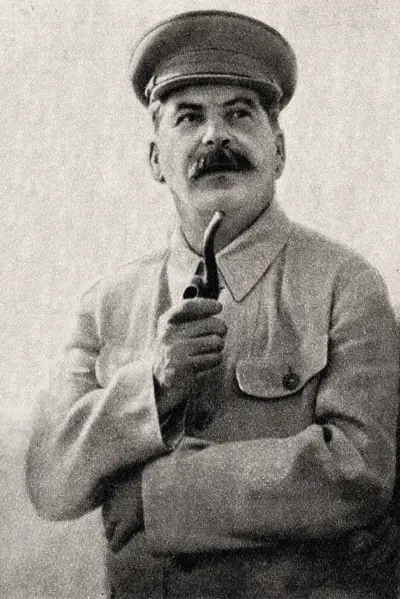
Joseph Vissarionovich Stalin was a Georgian revolutionary and the ruler of the Soviet Union from 1927 until 1953. He served as both General Secretary of the Communist Party of the Soviet Union (1922–1952) and Chairman of the Council of Ministers of the Soviet Union (1941–1953). Despite initially governing the country as part of a collective leadership, he ultimately consolidated power to become the Soviet Union's de facto dictator by the 1930s. A communist ideologically committed to the Leninist interpretation of Marxism, Stalin formalized these ideas as Marxism–Leninism while his own policies are known as Stalinism.
