Charles Dickens Quotes
... the day intended for rest and cheerfulness into one of universal gloom, bigotry, and persecution.... [A day for] constables ... invested with arbitrary, vexatious, and the most extensive powers.... You cannot make people religious by act of Parliament, or force them to church by constables; they display their feelings by staying away.
In 1836, Sir Andrew Agnew introduced into the House of Commons the Sunday Observance Bill, by which almost all activities other than "works of piety, charity, or necessity" would be outlawed on Sunday. Writing under the name "Timothy Sparks," Charles Dickens noted that enforced Sunday observance would transform:
Charles Dickens, 1812-1890, English Writer, Sunday Under Three Heads
Sourced by: Eigen's Political and Historical Quotations


Adventists, like Jews and other groups believe that Sunday was the first Biblical day, and Saturday, the 7th and the Sabbath. Senator Blair had introduced a bill to make Sunday, the National Sabbath and require that all respect it. It was fought by the Adventists and others.

Like Protestantism, there are different sects of Judaism but not so many. The Reform Jews are the most modern Jewish religious group. Reform Judaism originated in France and developed in America in the 19th century, and most American Jews belong to this branch of Judaism. In Israel, the Reform Jews are a minority like the ultra-Orthodox of which this Rabbi was a leader. He was the head of the ultra-Orthodox Shas political party which often has substantial political power when the two major parties do not have enough votes to make a majority and they need Shas as a coalition partner. This minor party often has a great deal of political influence. Religiously however, Shas speaks for a small minority of Israelis. However, they and some other ultra-Orthodox have been able to control or be very influential with the Israeli Ministry of Religion and they have used this power to not give Reform Judaism any official recognition. Reform Rabbis—which include women—are not officially recognized in Israel and so far as this Rabbi and many of his followers are concerned, Reform Judaism is a great danger to Jews and Israel. The hatred, as in this quotation, for the Reform Jews, is greater than any animosity for the Arabs. In actuality, this rabbi and his followers, are culturally and religiously very much like the Muslims. As Sephardic Jews, they have grown up in the Middle East and before Israel’s founding, they lived in Islamic counties and absorbed much of their culture. Like ultra-orthodox Muslims, they believe in theocracy and oppose democracy. They oppose religious freedom, and oppose civil law and civil courts in favor of religious law and Rabbinical courts. See {637098} for their hostility to the Supreme Court. The friction between the secular, Reform and most Jews in Israel and the ultra-Orthodox simmers just below the surface and breaks out every so often, but the pressure to refrain from major political strife is great lest there not be enough of a united front to protect the Jewish people from the extremists in the Middle East who want to nullify the Israeli state by force and would threaten the very lives of Jewish people.

Jews were forced to convert to Catholicism under penalty of death. While the archbishop did not approve, he did not describe the murders in moral terms or used his great religious power to stop the practice.


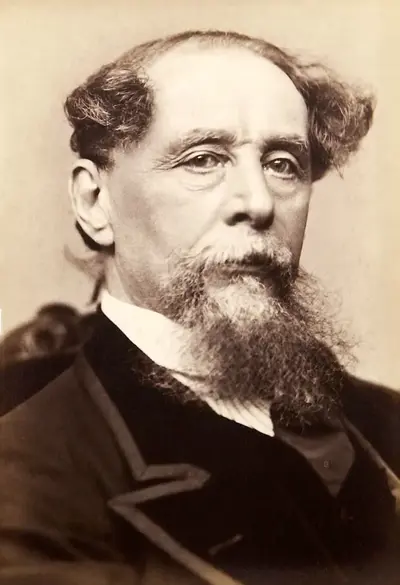
Charles John Huffam Dickens FRSA was an English writer and social critic. He created some of the world's best-known fictional characters and is regarded by many as the greatest novelist of the Victorian era. His works enjoyed unprecedented popularity during his lifetime and, by the 20th century, critics and scholars had recognised him as a literary genius. His novels and short stories are widely read today.
