Rupert Sheldrake Quotes
The cumulative nature of the evolutionary process, the fact that memory is preserved, means that life grows not just through a random proliferation of new forms, but there's a kind of cumulative quality.
Abraham, Ralph, Terence McKenna, and Rupert Sheldrake. Chaos, Creativity, and Cosmic Consciousness. Park Street Press, 2001, p. 33.


This particular quotation is particularly distressful to some religious fundamentalists who not only will not accept that man evolved, but find it worse to accept that man is continuously evolving.

The Pope went on to state that Evolution was consistent with Roman Catholic doctrine, changing a position that had been taken by the Catholic Church and many fundamental protestant denominations. A few actually still reject evolution even after all the evidence and proof of the basic Darwinian theses. There is nothing in evolution that per se denies the existence of God or even that God created the universe and the mechanism of evolution. That is why the Catholic Church and so many Protestant Churches, Judaism, Buddhists, and so many other religions have no theological problem with evolution. Those religious groups who have difficulty with evolution are those fundamentalists (Protestants, Jewish and Muslims) who believe in the literal truth of Holy Scripture. They also assume that God designed each particular plant or animal species. Other religions hold that it was God who created the mechanism of evolution and that is how all the species developed and are developing today. Some religious evolutionists believe that evolution is God’s mechanism for perfecting man.


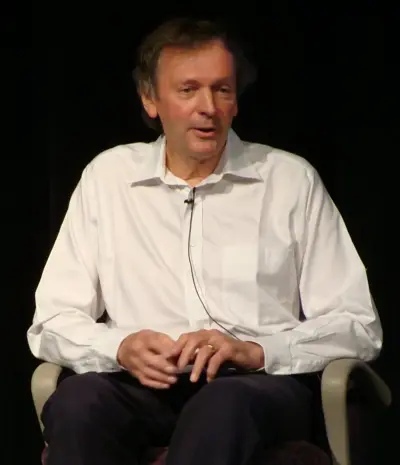
Alfred Rupert Sheldrake is an English author, and researcher in the field of parapsychology, who proposed the concept of morphic resonance, a conjecture which lacks mainstream acceptance and has been characterised as pseudoscience. He worked as a biochemist at Cambridge University from 1967 to 1973 and as principal plant physiologist at the International Crops Research Institute for the Semi-Arid Tropics in India until 1978.
