Hans Adolf Krebs Quotes
The existence of common features in different forms of life indicates some relationship between the different organisms, and according to the concept of evolution, these relations stem from the circumstance that the higher organisms, in the course of millions of years, have gradually evolved from simpler ones.
Krebs, Hans Adolf. "The Citric Acid Cycle." Nobel Lectures, Physiology or Medicine 1942-1962, Elsevier Publishing Company, 1964, pp. 399-410.


The Pope went on to state that Evolution was consistent with Roman Catholic doctrine, changing a position that had been taken by the Catholic Church and many fundamental protestant denominations. A few actually still reject evolution even after all the evidence and proof of the basic Darwinian theses. There is nothing in evolution that per se denies the existence of God or even that God created the universe and the mechanism of evolution. That is why the Catholic Church and so many Protestant Churches, Judaism, Buddhists, and so many other religions have no theological problem with evolution. Those religious groups who have difficulty with evolution are those fundamentalists (Protestants, Jewish and Muslims) who believe in the literal truth of Holy Scripture. They also assume that God designed each particular plant or animal species. Other religions hold that it was God who created the mechanism of evolution and that is how all the species developed and are developing today. Some religious evolutionists believe that evolution is God’s mechanism for perfecting man.


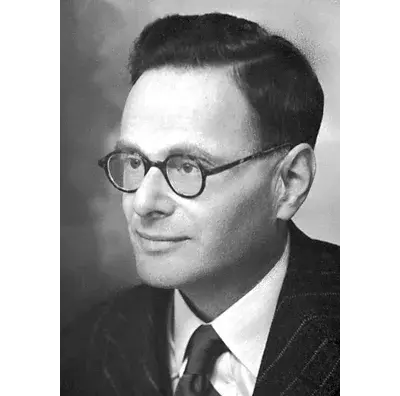
Sir Hans Adolf Krebs was a German-born British biologist, physician and biochemist. He was a pioneer scientist in the study of cellular respiration, a biochemical process in living cells that extracts energy from food and oxygen and makes it available to drive the processes of life. He is best known for his discoveries of two important sequences of chemical reactions that take place in the cells of humans and many other organisms, namely the citric acid cycle and the urea cycle. The former, often eponymously known as the "Krebs cycle", is the key sequence of metabolic reactions that provides energy in the cells of humans and other oxygen-respiring organisms; and its discovery earned Krebs a Nobel Prize in Physiology or Medicine in 1953. With Hans Kornberg, he also discovered the glyoxylate cycle, which is a slight variation of the citric acid cycle found in plants, bacteria, protists, and fungi. Krebs died in 1981 in Oxford, where he had spent 13 years of his career from 1954 until his retirement in 1967 at the University of Oxford.
