Wilhelm Reich Quotes
The cry for freedom is a sign of suppression. It will not cease to ring as long as man feels himself captive. As diverse as the cries for freedom may be, basically they all express one and the same thing: The intolerability of the rigidity of the organism and of the machine-like institutions which create a sharp conflict with the natural feelings for life. Not until there is a social order in which all cries for freedom subside will man have overcome his biological and social crippling, will he have attained genuine freedom.
Reich, Wilhelm. The Mass Psychology of Fascism. Farrar, Straus and Giroux, 1970, p. 348.


It is hard for us today to understand why intelligent, thoughtful, people would seriously consider and even advocate anarchy. Yet there were many intelligent people who preached anarchy. The key to understanding this is that it is also hard for us to realize how terrible and actually dangerous was typical life under the Russian Government of the Czars. It was not only that most people were serfs--virtually slaves, but the government officials, the military and civilian both, could and did, abuse people in every way imaginable. In America today, if any of us were unfortunate to be the victim of violence, the odds are high that it would be at the hands of another citizen. In Russia (and other countries) at the time, the odds were that the perpetrator of the violence was a government official or government sanctioned person—police, military, aristocrats, civil officers. As but one example. Cossacks would frequently get drunk, pillage and rape a community and kill any who resisted—all with impunity. This quotation from Tolstoy is the classic argument of the anarchist at the time. It was impossible that the absence of government could be as bad as the government then was.


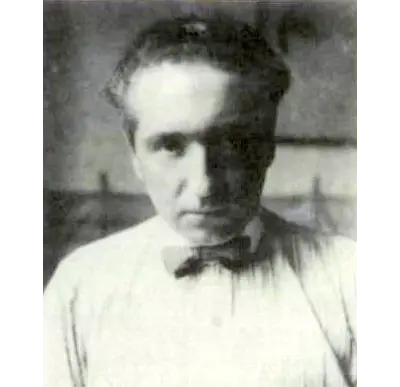
Wilhelm Reich was an Austrian doctor of medicine and psychoanalyst, a member of the second generation of analysts after Sigmund Freud. The author of several influential books, most notably Character Analysis (1933), The Mass Psychology of Fascism (1933), and The Sexual Revolution (1936), Reich became known as one of the most radical figures in the history of psychiatry.
