Friedrich Hayek Quotes
The credit which the apparent conformity with recognized scientific standards can gain for seemingly simple but false theories may, as the present instance shows, have grave consequences.
Hayek, Friedrich A. "The Pretence of Knowledge." The American Economic Review, vol. 79, no. 6, 1989, p. 3.


_0_thumbnail_47x47.jpg)


One classic example is the scientist who is testifying before a Congressional Committee. Typically if there is a political issue, the politician of each viewpoint will find a scientists who supports their view. In a huge country, they can always find on or two to support any idea regardless of its validity. In the world of science, the scientist who has been doing experiments in a field for years and has published articles in peer-reviewed journals, teaches other scientists who do outstanding work, and have won prizes or accolades from his/her peers is given much more credibility than the scientist who has none of these accomplishments and just may have a different point of view and claim that the first scientist is in error UNLESS the critical scientist can show mathematical or other scientific proof that the first is wrong. Often in politics, the lesser critical scientist offers questions which the leading scientist cannot answer bit in science that proves nothing. There is ALWAYS much more a scientists does NOT know about an area than he does know. See {623513}.


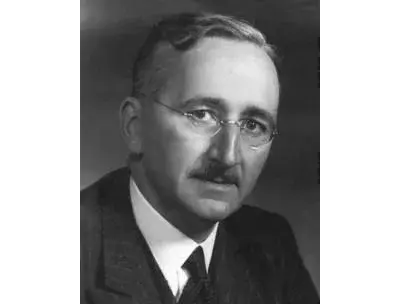
Friedrich August von Hayek CH FBA, often referred to by his initials F. A. Hayek, was an Austrian-British economist and philosopher who is best known for his defence of classical liberalism. Hayek shared the 1974 Nobel Memorial Prize in Economic Sciences with Gunnar Myrdal for his "pioneering work in the theory of money and economic fluctuations and [...] penetrating analysis of the interdependence of economic, social and institutional phenomena". His account of how changing prices communicate information that helps individuals co-ordinate their plans is widely regarded as an important achievement in economics, leading to his Nobel Prize.
