Judith Ellen Foster Quotes
The country needs the political work of women today as much as it has ever needed woman in any other work at any other time.
Foster, Judith Ellen. "Woman in Politics." The World's Congress of Representative Women, edited by May Wright Sewall, Rand, McNally & Company, 1894.


She was instrumental in outlawing slavery and two years after this speech she and her daughters appeared in public without the traditional Burka or veils. The conservative fundamentalists were outraged and they deposed her husband and her modern influence ended.


Jinnah was a modern Islamist who saw the role of females in a modern context. He, like the Indian Hindu leaders were in a sense products of the West and Western government and education. He would be very surprised that in his Pakistan men can murder their female relatives who they believe have dishonored the family, or that women would not be educated in the Madrassas, or that authorities could sentence a female relative of a man deemed guilty of seduction to be gang raped, but that is what happens in modern Pakistan. Jinnah and many of the early leaders believed that their new government could modernize Islam but the control and influence went the other way. Pakistan became a religiously dominated autocracy rather than the democracy that Jinnah foresaw.


The importance of women in the Hamas, fundamentalist vision is to function as a brood mare to “manufacture” men and then to bring them up which at least requires something more than their bodies. The role of women in producing other women however is never mentioned as important.
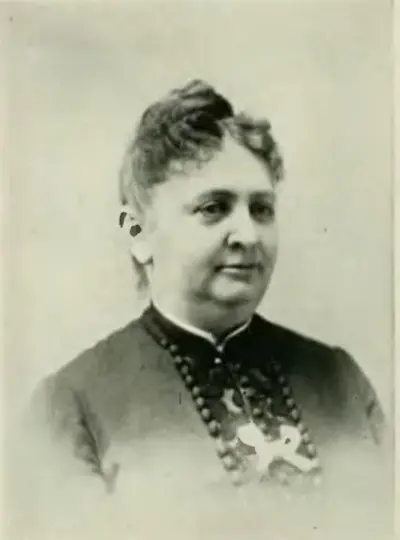
Judith Ellen Horton Foster was an American lecturer, temperance worker, and lawyer. She is thought to be the first woman in Iowa who was actually engaged in practice and the fourth woman admitted to practice before the Supreme Court of Iowa. In her time she was known as "The Iowa Lawyer".
