Friedrich Hayek Quotes
The conception that government should be guided by majority opinion makes sense only if that opinion is independent of government. The ideal of democracy rests on the belief that the view which will direct government emerges from an independent and spontaneous process. It requires, therefore, the existence of a large sphere independent of majority control in which the opinions of the individuals are formed.
Hayek, Friedrich A. The Constitution of Liberty. University of Chicago Press, 1960, p. 109.


The Red Scare had affected the country. The House Un-American Activities Committee had frightened much of the country claiming that the Communists had infiltrated the government. But when facts and proof were demanded, they only came up with some workers in the Hollywood film industry who had gone to communist meetings and some who had joined the party before the War when The Great Depression was still plaguing the country. The Hollywood and TV executives caved in to the political demagogues and fired and blacklisted not only the communists but those who refused to testify. The actors and musicians could not work for several years until the country came to its senses, but the screenwriters wrote under false names. At least one Academy award was won that way.

The public desire to know about and influence the details about diplomatic affairs is not just a problem of the 21st century. Here the Secretary of State describes it in 1922.


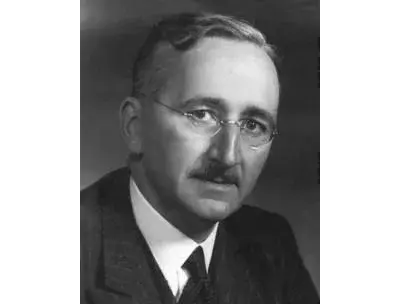
Friedrich August von Hayek CH FBA, often referred to by his initials F. A. Hayek, was an Austrian-British economist and philosopher who is best known for his defence of classical liberalism. Hayek shared the 1974 Nobel Memorial Prize in Economic Sciences with Gunnar Myrdal for his "pioneering work in the theory of money and economic fluctuations and [...] penetrating analysis of the interdependence of economic, social and institutional phenomena". His account of how changing prices communicate information that helps individuals co-ordinate their plans is widely regarded as an important achievement in economics, leading to his Nobel Prize.
